
AI-Powered Quality Management: Reviewing 100% of Interactions Instead of 2%
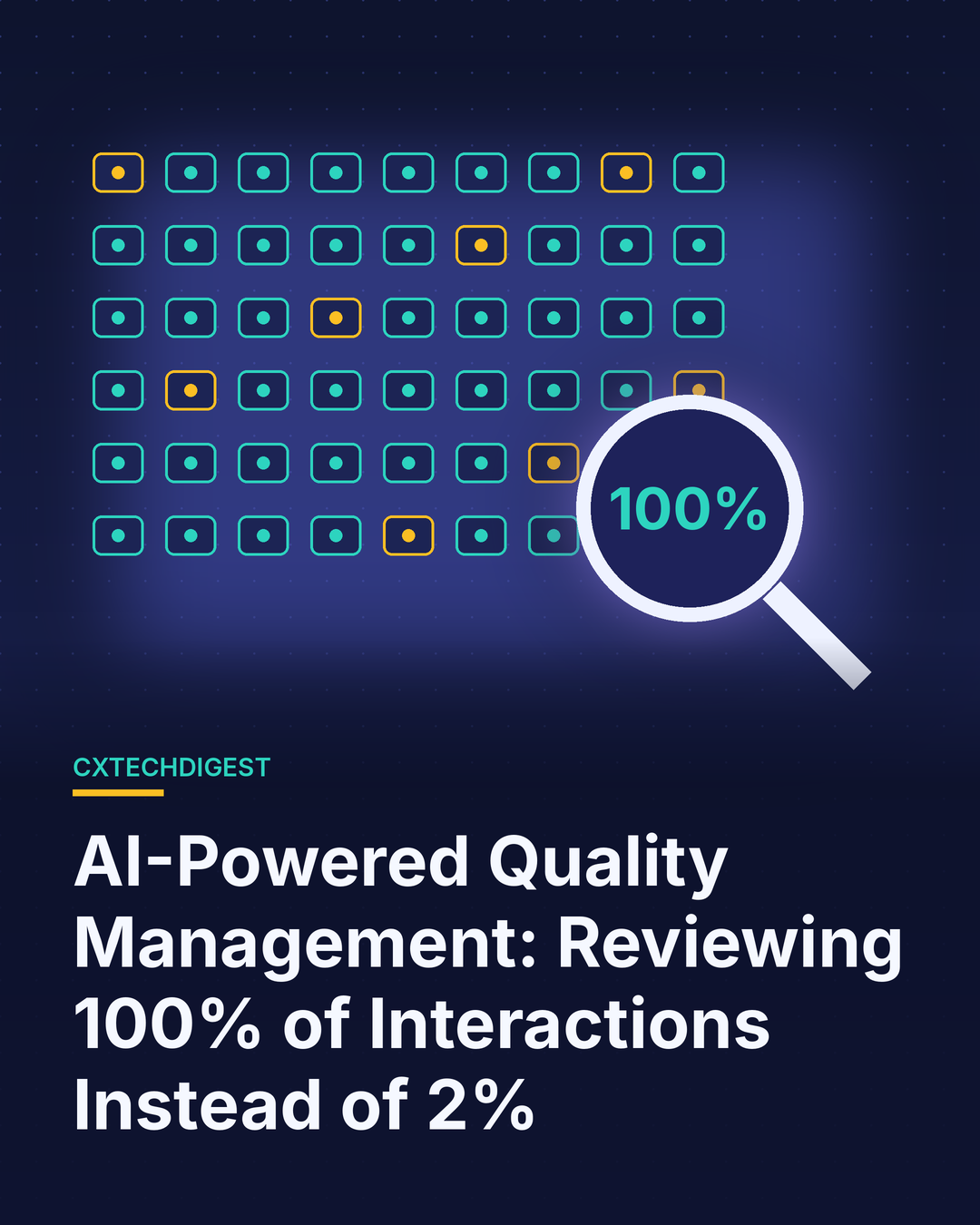
Traditional contact center quality management has a sampling problem. Quality analysts typically review only a tiny fraction of interactions, often just a few calls per agent per month, selected randomly or based on hunches. The rest go unseen. Agents are evaluated on a sliver of their work, coaching is based on anecdotes, and systemic problems hide in the 98% of conversations nobody hears.
AI changes the math. With accurate transcription and language models that can evaluate conversations against quality criteria, contact centers can now analyze every call, chat, email and AI agent interaction. That shift transforms quality management from an audit function into a source of continuous insight.
What automated QA makes possible
Fair, consistent evaluation. Every agent is assessed on all of their interactions using the same criteria, removing the luck of the draw and evaluator inconsistency that undermine trust in traditional scorecards.
Targeted coaching. Instead of generic feedback, supervisors can see specific patterns, such as an agent who consistently skips verification steps or struggles with billing questions, and coach to those exact gaps with real examples.
Compliance at scale. Required disclosures, identity verification and prohibited language can be checked on every interaction, dramatically reducing compliance risk in regulated industries.
Root-cause insight. Analyzing all conversations reveals why customers are contacting you. A spike in calls about a confusing invoice, a broken product feature or a failing website flow becomes visible quickly, giving other departments actionable intelligence.
Quality for AI agents too. As AI handles more conversations, it needs quality oversight just like human agents. Automated QA can evaluate AI interactions for accuracy, policy adherence, tone and resolution, catching errors before they spread.
Redefining the analyst role
Automated QA doesn’t eliminate quality teams. It elevates them. Instead of spending most of their time listening to random calls, analysts can focus on calibrating AI scoring, investigating trends, reviewing edge cases, and partnering with supervisors on coaching and with operations on process fixes.
Getting it right
Rethink your scorecard. Many traditional forms reward checklist behaviors like using the customer’s name three times. Focus criteria on what drives outcomes: accurate resolution, clear communication, empathy and compliance.
Calibrate continuously. Compare AI scores with expert human evaluations regularly, and adjust criteria where they diverge. Agents will only trust scores that match their sense of fairness.
Keep humans in disputes. Give agents a clear way to challenge scores, with human review of contested evaluations.
Use insight for coaching, not just discipline. If automated QA becomes primarily a tool for catching mistakes, agent morale will suffer. Celebrate strengths and recognize great interactions as readily as flagging problems.
Share insights across the business. The most valuable findings often concern product, billing, policy or website issues that frontline agents can’t fix. Build regular reporting to the teams that can.
The bottom line
Reviewing 2% of interactions was always a compromise forced by limited resources. AI removes that constraint. Contact centers that move to 100% coverage gain fairer evaluations, better coaching, stronger compliance and a clear view of what customers are really experiencing. That makes quality management one of the highest-value AI investments a CX leader can make.