
B2B Customer Experience: Applying Consumer-Grade CX to Complex Buying Journeys
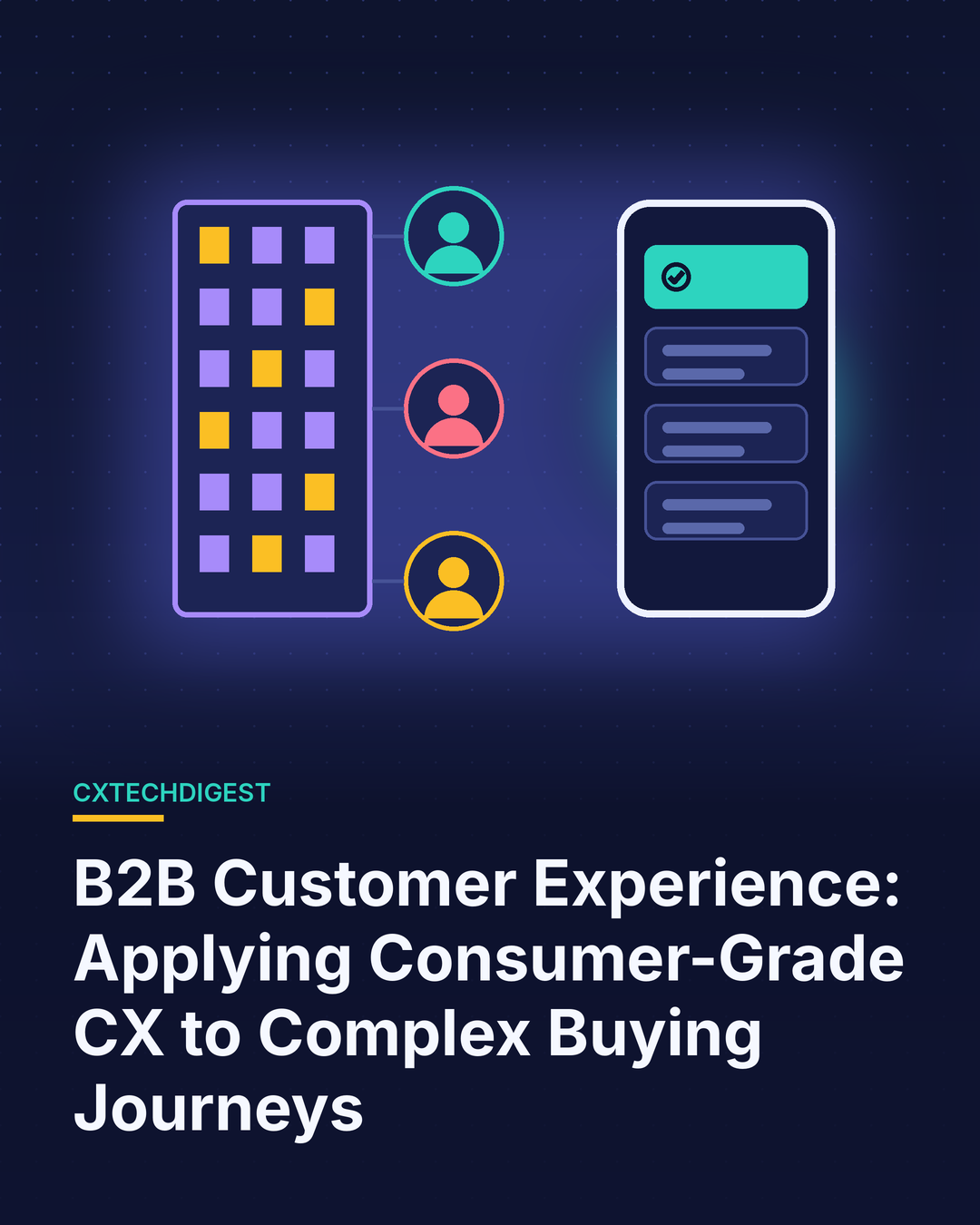
The people who buy enterprise software, industrial equipment or professional services are the same people who order groceries with one tap, track packages in real time and get instant answers from their bank’s app. At home, they enjoy fast, personalized, self-service experiences. At work, they often face slow quotes, confusing portals, disconnected account teams and support tickets that disappear into a void.
That gap is becoming a competitive liability. B2B buyers increasingly expect consumer-grade experiences, and vendors who deliver them win and retain more business. But B2B journeys are genuinely more complex, so copying consumer playbooks isn’t enough.
What makes B2B different
Multiple stakeholders. Purchases involve buying committees, often with different priorities across finance, IT, procurement, legal and end users. Each needs a different experience.
Long, nonlinear journeys. Evaluations can take months, with stakeholders entering and leaving the process along the way.
Ongoing relationships. Revenue depends on renewals, expansion and adoption long after the initial sale, making post-purchase experience critical.
Complex products and contracts. Custom pricing, implementation projects, integrations and service-level agreements add friction consumers never face.
Bringing consumer-grade CX to B2B
Self-service where buyers want it. Many B2B buyers prefer to research independently before talking to sales. Provide transparent product information, pricing guidance where possible, interactive demos, ROI calculators and peer reviews. After purchase, offer portals where customers can place orders, track deliveries, manage users, view invoices and resolve common issues without opening a ticket.
Personalization by account and role. Tailor content and experiences to each stakeholder’s concerns. A CFO wants cost and risk information. An IT lead wants security and integration details. AI makes this personalization practical at scale.
Fast, intelligent support. AI agents and knowledge bases can resolve routine questions instantly, while complex technical issues route quickly to specialists with full account context.
A connected account view. Sales, customer success, support, billing and marketing should all see the same account history. Nothing frustrates B2B customers more than explaining their situation repeatedly to different people at the same vendor.
Proactive communication. Notify customers about service disruptions, renewal dates, usage trends and new features relevant to them before they have to ask.
Frictionless commercial processes. Simplify quoting, contracting, invoicing and renewals. Slow or confusing paperwork can derail deals and sour relationships.
Measure across the account
B2B CX metrics should reflect the whole relationship. Track satisfaction and effort across different stakeholder roles, not just the primary contact. Monitor product adoption, time to value after onboarding, support resolution times, renewal rates and net revenue retention. Watch for relationship risks such as a departing champion or declining executive engagement.
Organize around the customer
Delivering a seamless B2B experience requires breaking down silos between sales, customer success, support and finance. Shared metrics, shared account data and clear ownership for each stage of the relationship help ensure customers experience one company, not a collection of departments.
The bottom line
B2B buyers don’t lower their expectations when they come to work. Vendors that combine consumer-grade simplicity, speed and personalization with an understanding of complex buying committees and long-term relationships will stand out, win more deals and keep customers longer.