
The Common Data Environment Explained: One Source of Truth From Design to Handover
A typical construction project generates an enormous volume of information: drawings, models, specifications, RFIs, submittals, change orders, meeting minutes, inspection reports, photos, schedules and closeout documents. That information is created by dozens of organizations, from architects and engineers to contractors, trades, owners and consultants.
When it’s scattered across email inboxes, file servers, personal drives and disconnected tools, projects suffer. Teams build from outdated drawings, decisions get lost and handover becomes a scramble. The common data environment, or CDE, is designed to solve that problem.
What is a common data environment?
A CDE is a single, shared, managed digital environment where all project information is collected, stored, shared and controlled throughout the project lifecycle. It isn’t just a file repository. A true CDE applies structure, permissions, version control and workflows so everyone works from the right information at the right time.
The concept is central to international information management standards such as ISO 19650, which describes how information should be organized, approved and exchanged on built asset projects.
How a CDE organizes information
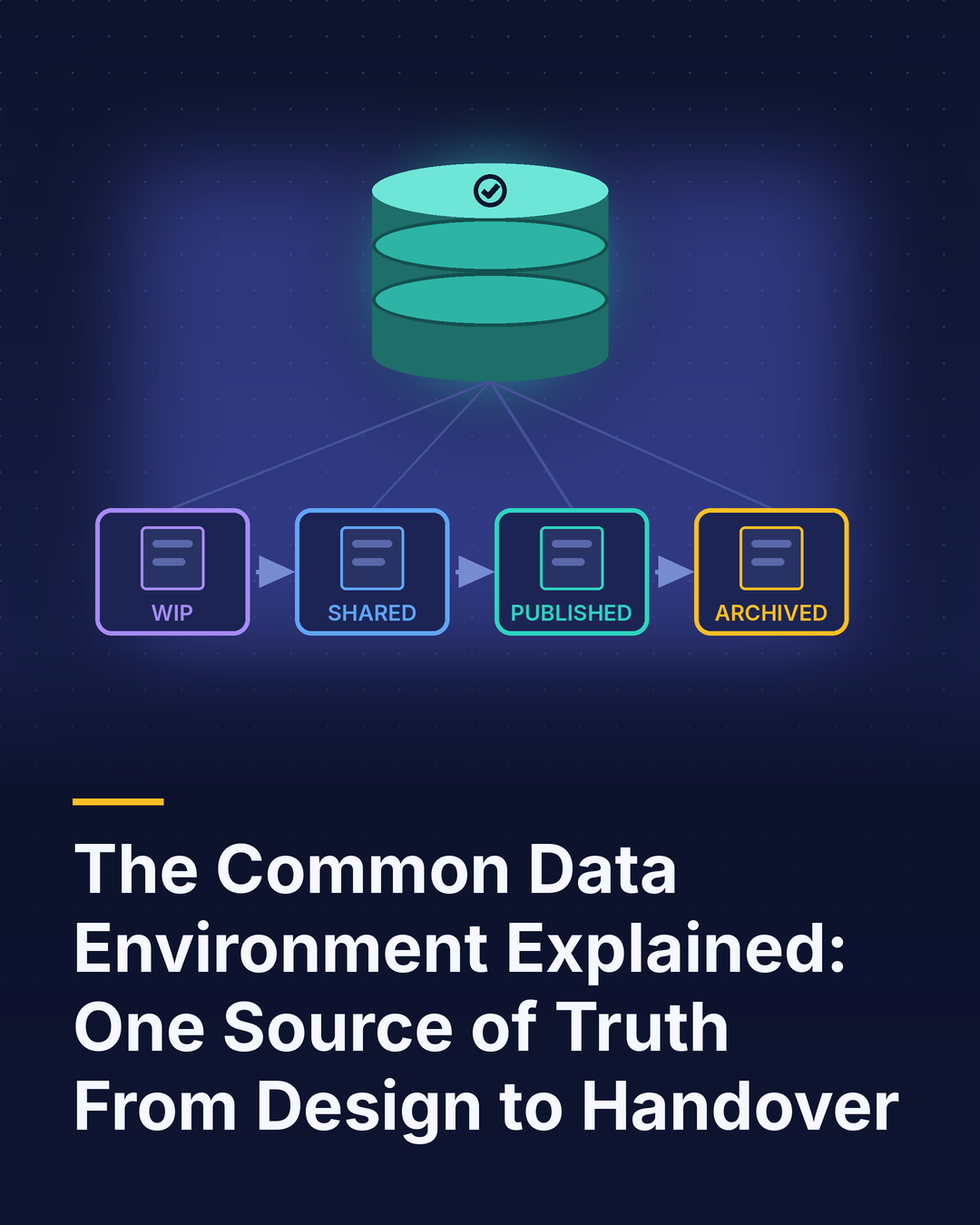
Information in a CDE typically moves through defined states:
Work in progress. Each organization develops its own information, such as a structural model or set of drawings, visible only to its own team.
Shared. Once checked and approved internally, information is shared with other project participants for coordination and review.
Published. Approved information is authorized for use, such as for construction or procurement.
Archived. Superseded versions and completed records are retained for history, auditing and handover.
These states, combined with clear approval steps, help ensure teams don’t build from drafts or outdated documents.
Core capabilities to look for
- Version control, so users always see the current version while retaining full revision history
- Permissions and access control by organization, role and folder
- Metadata and naming standards that make information searchable and consistent
- Review and approval workflows with tracked comments and sign-offs
- Model and drawing viewing in a browser or on mobile devices, including in the field
- Integrated processes such as RFIs, submittals, issues and transmittals linked to the documents they reference
- Audit trails showing who did what, and when
- Structured handover of information to owners and operators
Why it matters for project managers
A well-run CDE reduces rework caused by outdated information, speeds communication and approvals, strengthens accountability, and protects the team in disputes by preserving a complete record of decisions. It also makes closeout far easier, since handover information is collected throughout the project rather than assembled at the end.
Implementing a CDE successfully
- Define information requirements early, including what owners need at handover.
- Establish a project information protocol covering folder structures, naming conventions, metadata and approval workflows.
- Set permissions carefully so each party sees what they need and nothing more.
- Make it the only official channel. If drawings and decisions still flow through email, the CDE won’t become the source of truth.
- Onboard every participant, including trades, consultants and owners.
- Audit compliance regularly to keep information organized as the project grows.
The bottom line
A common data environment turns scattered project information into a controlled, trusted resource. For project managers, it means fewer errors, faster decisions and a smoother path from design through construction to handover, with one source of truth everyone can rely on.
Owners increasingly expect structured, reliable project data at handover, and a well-managed CDE makes that expectation achievable. It also builds a valuable record of every project that firms can learn from on the next one. Teams that commit to the CDE from day one will find information management becomes a strength rather than a source of risk.