
The Human Handoff: Designing Seamless Escalation From AI to Live Agents
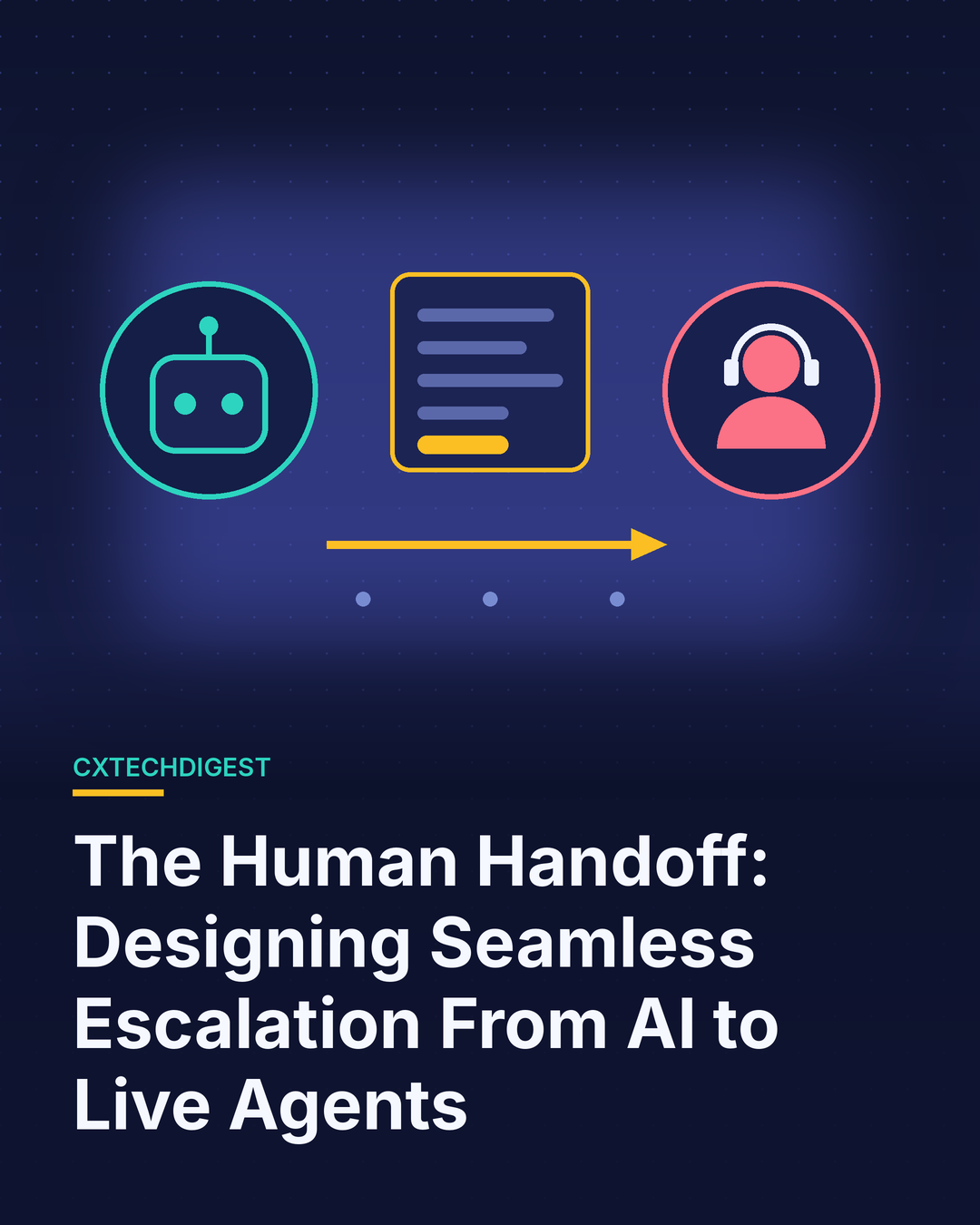
As AI agents take on more customer conversations, the moment of handoff to a human has become one of the most important points in the customer journey. Get it right, and customers barely notice the transition. Get it wrong, and you create the experience customers hate most: repeating themselves, waiting in a queue after already investing time, and talking to an agent who has no idea what just happened.
The quality of your escalation design often determines whether customers view AI as helpful or as an obstacle.
When to hand off
Escalation should be triggered by clear, well-defined signals rather than left to chance:
- The customer asks for a person. Honor the request promptly. Making customers fight to reach a human is the fastest way to erode trust.
- The AI can’t resolve the issue. If the agent lacks the information, system access or authority to complete the request, it should recognize that early instead of looping.
- Rising frustration. Sentiment signals such as repeated rephrasing, negative language or escalating tone should trigger a handoff before the customer gets angry.
- High stakes or sensitivity. Fraud, bereavement, complaints, vulnerable customers and high-value accounts warrant human involvement.
- Policy exceptions. Requests outside the AI’s defined limits, such as large refunds or goodwill credits, need human approval.
What makes a handoff seamless
Full context transfer. The human agent should receive the conversation transcript, an AI-generated summary of the issue, steps already attempted, customer identity and verification status, and relevant account data. The customer should never have to repeat information.
Warm, not cold, transfers. Tell the customer what’s happening and what to expect: who they’ll speak with, how long it may take and what the person will already know. Silence or a sudden “please hold” feels like abandonment.
Intelligent routing. Route escalations based on the issue, its complexity, customer value and agent skills, not just the next available person. A billing dispute should reach a billing specialist.
Priority for escalated customers. Customers who have already invested time with AI shouldn’t go to the back of the queue. Many organizations give escalated contacts priority or offer a scheduled callback.
Channel continuity. If a customer started in chat, continue in chat unless they prefer a call. Forcing a channel switch adds friction.
Equip the human side
The agent receiving the handoff needs a clean workspace that presents the AI summary up front, suggests next steps and lets them act quickly. Train agents to acknowledge what the customer already shared, such as: “I can see you’ve been trying to update your billing date. Let me finish that for you.” That single sentence turns a frustrating transfer into a reassuring one.
Measure and improve
Track how often handoffs happen, why they happen, how long customers wait afterward, whether issues are resolved after escalation and how customers rate the experience. Review escalated conversations regularly. Frequent handoffs for the same intent often point to a knowledge gap, missing system integration or a policy that’s too restrictive for the AI.
The bottom line
AI and human agents shouldn’t feel like two separate services. The best customer experiences treat them as one team, with the handoff designed as carefully as any other part of the journey. When context flows with the customer, escalation becomes a strength rather than a failure point.