
Unified Customer Profiles: Why CDPs Are Becoming the Backbone of CX
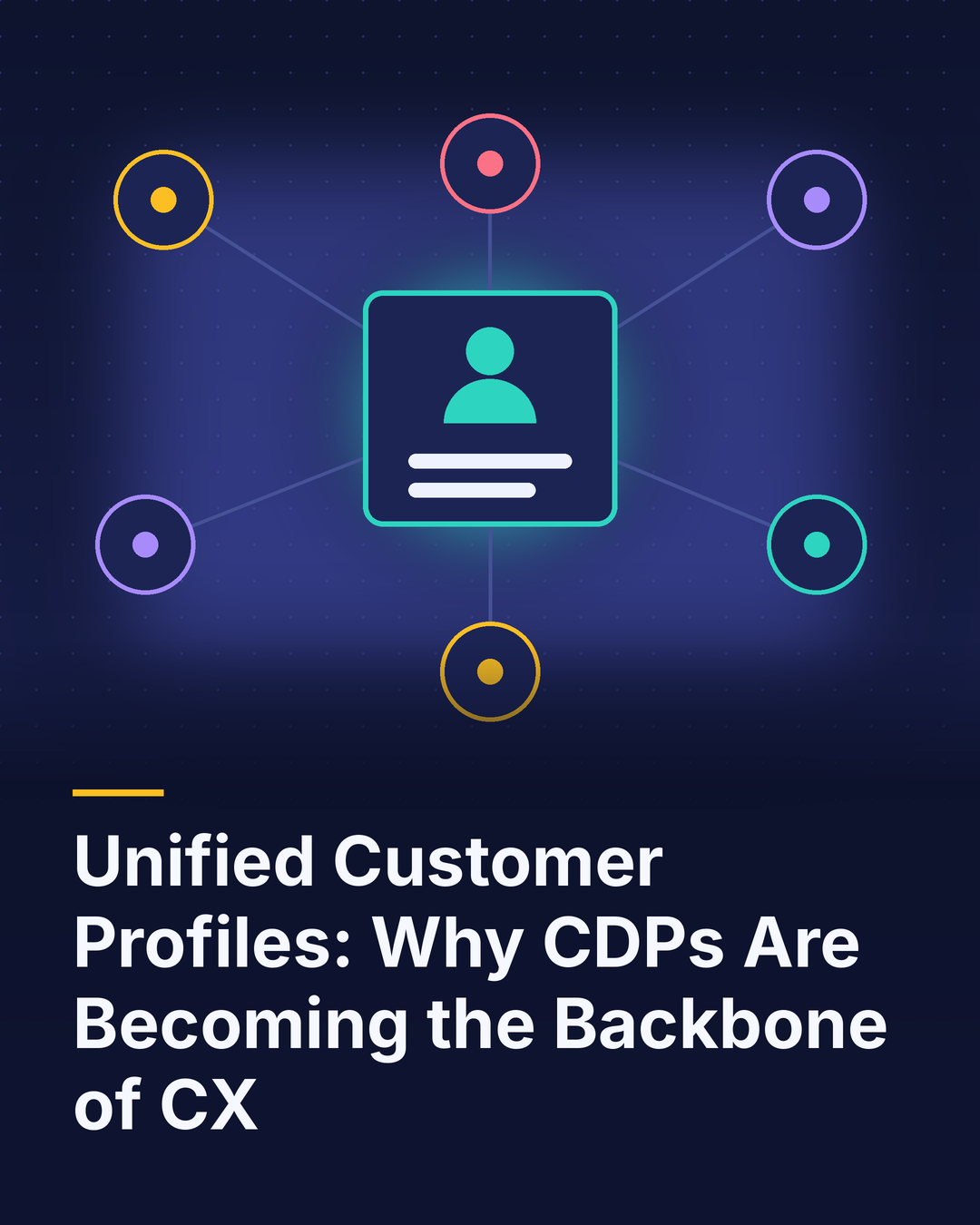
Customers expect every interaction with a company to reflect everything they’ve already done: the products they bought, the issue they reported last week, the email they just opened, the chat they abandoned an hour ago. Most organizations can’t deliver that, because customer data is scattered across marketing platforms, CRMs, commerce systems, service desks, billing systems and mobile apps.
Customer data platforms (CDPs) were created to solve that problem by unifying data from multiple sources into a single, persistent customer profile. Originally a marketing tool, the CDP is fast becoming core infrastructure for the entire customer experience, and AI is the reason.
Why the CDP has moved to the center
AI needs context. AI agents, agent assist tools and personalization engines are only as good as the data they can access. An AI agent that doesn’t know a customer has an open complaint or just upgraded their plan will give generic or even damaging responses. Unified profiles provide that context.
Real-time expectations. Customers notice when a company sends a promotional email right after they filed a complaint, or asks them to verify information they shared minutes earlier in another channel. Real-time profile updates allow every touchpoint to respond to the latest interaction.
First-party data matters more. With privacy regulation tightening and third-party tracking declining, companies depend more on the data customers share directly. CDPs help collect, organize and activate that data responsibly.
Service and marketing are converging. The best customer experiences coordinate sales, service and marketing interactions. A shared profile makes it possible to suppress marketing during an open service issue, trigger proactive outreach when something goes wrong, or tailor offers based on service history.
What a CX-ready CDP should do
- Identity resolution that accurately connects a customer across devices, channels and accounts
- Real-time data ingestion and activation, so profiles update and trigger actions within seconds
- Service data integration, including tickets, contact reasons, sentiment and satisfaction scores, not just marketing behavior
- Consent and preference management that respects customer choices across every channel
- Easy access for AI and frontline tools, so agents, bots and personalization engines can use profile data where interactions happen
- Account-level views for B2B companies, connecting individuals to the organizations they buy for
Common pitfalls
Treating it as a marketing-only project. If service, sales and product teams aren’t involved, the CDP will lack the data and use cases that matter most to customer experience.
Neglecting data quality. Unifying messy data creates a unified mess. Invest in data governance, standard definitions and cleanup.
Collecting without activating. A beautiful profile that no frontline system uses delivers no value. Start with specific, high-impact use cases.
Overlooking architecture options. Composable approaches that build on an existing data warehouse are increasingly popular alternatives to standalone CDP suites. Choose based on your data maturity and team skills.
Where to start
Pick two or three use cases where unified data would clearly improve the experience, such as giving agents a complete customer view or suppressing marketing during open service issues. Prove the value there, then expand.
The bottom line
Every AI-powered customer experience depends on knowing who the customer is and what they’ve experienced. Unified customer profiles make that possible. That’s why the CDP is moving from the marketing stack to the backbone of CX.