
Application-Consistent Recovery for Multi-VM Apps
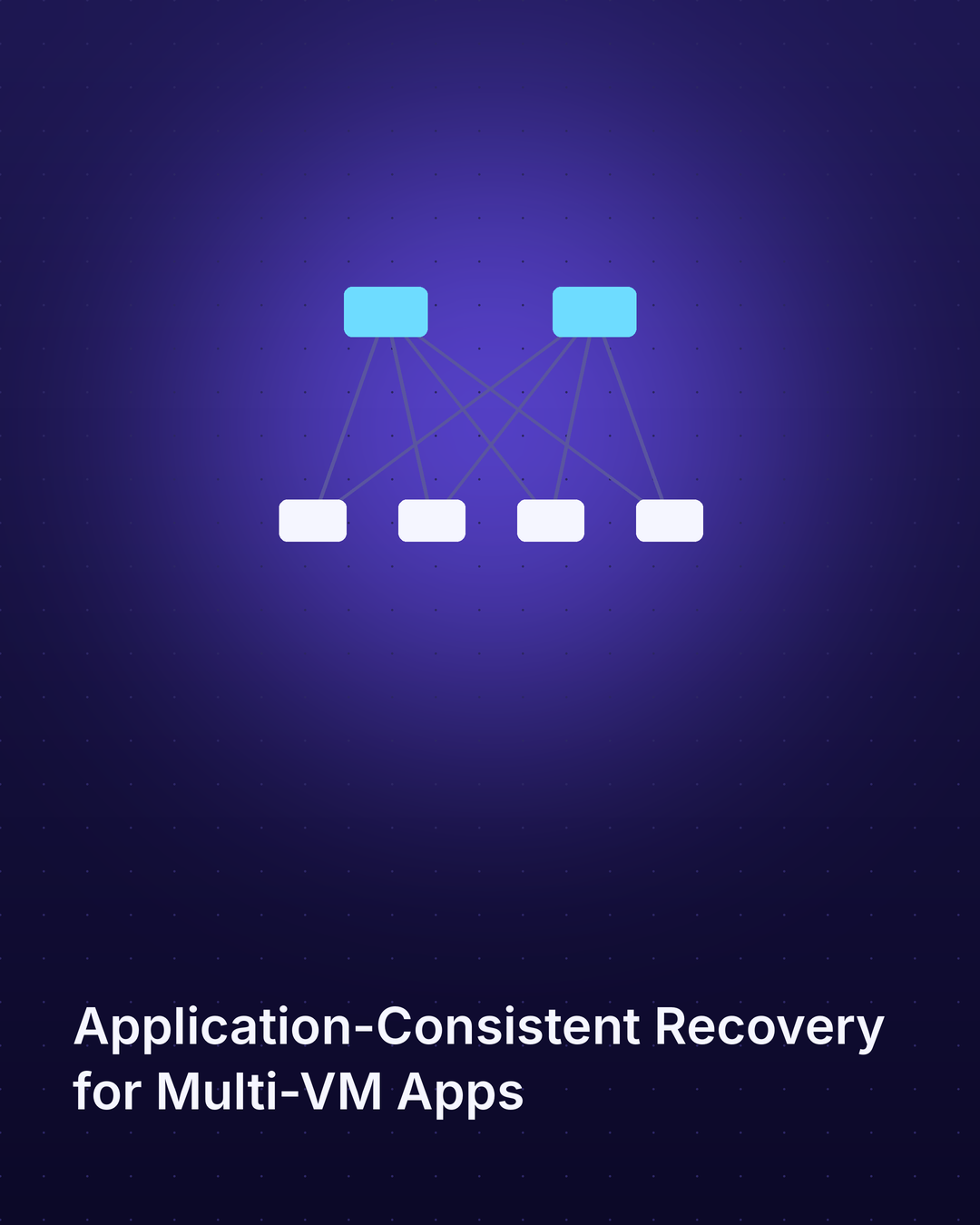
Modern business applications rarely run on a single server. A typical application might include web servers, application servers, databases and supporting services, each running on its own virtual machine. These components constantly exchange data and depend on one another being in a consistent state. I have seen recovery efforts in which every individual server came back successfully, yet the application refused to work. The reason was that each server had been restored to a slightly different point in time. Application-consistent recovery addresses precisely this problem.
The Consistency Problem
When virtual machines are protected independently, their recovery points may differ by seconds, minutes or longer. A database might be restored to one moment and the application server that writes to it to another. Transactions may appear in one component but not another. The result can be data corruption, application errors or a system that simply will not start.
Consistency Groups
The solution is to protect related virtual machines together as a consistency group. All members of the group are captured at the same point in time, ensuring that when they are recovered, their states align. Data written across multiple servers remains coherent.
Application Awareness
Consistency at the storage level is necessary but may not be sufficient for some applications. Databases, for instance, hold data in memory that has not yet been written to disk. Application-aware protection coordinates with the application to ensure in-flight transactions are properly captured, producing a clean recovery point.
Recovery Orchestration
Recovering a multi-tier application involves more than restoring data. Components must start in the correct order, network settings may need adjustment and services must reconnect. Recovery orchestration automates these steps, reducing recovery time and the risk of human error during a stressful event.
Mapping Dependencies
Organizations must understand which virtual machines belong together. Dependencies are not always documented, and applications evolve over time. Discovery tools and collaboration with application owners help build accurate groupings.
Testing the Whole Application
Recovery tests should verify that the entire application functions, not merely that each virtual machine starts. End-to-end testing confirms that consistency groups and orchestration work as intended.
Keeping Groups Current
As applications change, consistency groups must be updated. Regular reviews ensure new components are protected appropriately.
Documentation completes the picture. Recovery runbooks should describe each application group, its dependencies, its start order and the checks that confirm it is working. When an incident occurs, staff unfamiliar with a particular application can then follow clear guidance rather than relying on the memory of a single expert who may be unavailable. Runbooks should be reviewed after every significant application change.
The Bottom Line
Multi-tier applications require all components to be recovered to the same point in time. Consistency groups, application awareness and recovery orchestration together make this possible. Accurate dependency mapping and end-to-end testing ensure recovery works in practice. Keeping groups current prevents gaps as applications evolve. In my view, application-consistent recovery is what separates a set of restored servers from a working business service.