
Automating Account Reconciliations: Where the Biggest Time Savings Hide
My grandmother balanced her checkbook to the penny every single month. She’d sit at the kitchen table with her bank statement, a pencil and a cup of coffee, ticking off each check one by one. If she was off by even a dime, she’d go back through the whole thing until she found it.
I admire that discipline. But when I see finance teams reconciling thousands of accounts with essentially the same approach, just with spreadsheets instead of pencils, I can’t help thinking there’s a better way. There is, and it’s one of the fastest wins available in finance today.
Why Reconciliations Eat So Much Time
Reconciliations are essential. They’re how you prove the numbers in your general ledger are real. But the process is often painfully manual: exporting data from multiple systems, lining up transactions in spreadsheets, investigating differences and documenting everything for review. Multiply that across bank accounts, intercompany balances, clearing accounts and subledgers, and it’s easy to see why reconciliation work dominates the close.
Where Automation Saves the Most
Not every reconciliation is equally worth automating. The biggest savings usually come from:
- High-volume accounts. Bank, credit card and payment processor accounts with thousands of transactions a month.
- Rules-based matching. Transactions that can be matched on amount, date and reference number.
- Recurring zero-balance accounts. Clearing and suspense accounts that should net to zero.
- Low-risk balance sheet accounts. Accounts that rarely change and can be certified automatically when nothing moves.
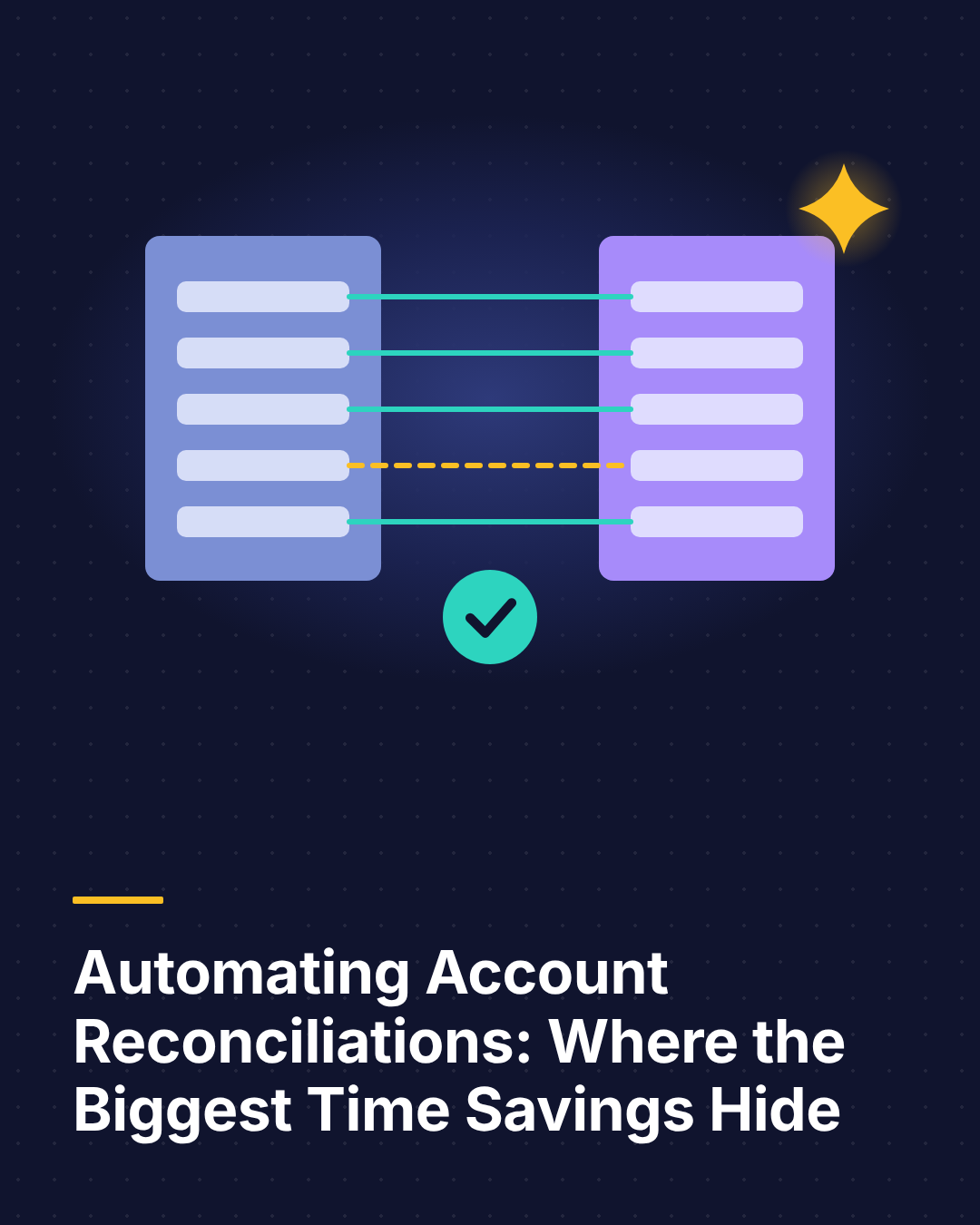
Modern tools can match the vast majority of these transactions automatically, leaving people to investigate the true exceptions.
Getting Started
Start by inventorying your accounts and ranking them by volume and risk. Clean up your matching data, since consistent reference numbers make automation far more effective. Then automate in waves, beginning with the highest-volume accounts. Keep the review step, but let reviewers focus on exceptions and judgment rather than ticking boxes.
The Bottom Line
Automating reconciliations is one of the fastest, most reliable wins available to finance teams today. It frees up enormous amounts of time during the close, reduces the risk of errors slipping through and gives auditors cleaner, more consistent documentation. Most importantly, it shifts your team’s energy away from ticking boxes and toward investigating the exceptions that really matter.
You don’t have to automate everything at once. Rank your accounts by volume and risk, clean up your matching data and tackle the biggest opportunities first. Each wave of automation builds confidence and frees capacity for the next. My grandmother would approve of the accuracy, and I think she’d have been delighted to get her Sunday afternoons back.