
Building a Finance Data Strategy: One Source of Truth for Reporting and Analytics
At our last family reunion, three relatives told the story of how my grandparents met, and all three versions were different. One said it was at a dance, one said church, and one swore it was a county fair. Everyone was certain. Nobody could prove it. We finally dug out my grandmother’s diary, and the debate ended in about thirty seconds.
Finance teams have their own version of this problem. Sales reports one revenue number, finance reports another and the board deck shows a third. Each is defensible, but nobody trusts any of them completely. A finance data strategy is how you find the diary.
Why Finance Needs a Data Strategy
Finance sits at the center of the company’s data, pulling from ERP, CRM, billing, payroll, procurement and operational systems. Without a clear strategy, each team builds its own extracts, spreadsheets and definitions. The result is conflicting numbers, endless reconciliation between reports and analysts spending more time gathering data than analyzing it. As companies adopt AI, the cost of inconsistent data grows even higher.
The Core Elements
A strong finance data strategy typically includes:
- Common definitions. Agreed meanings for key metrics like revenue, bookings, customers and margin.
- Master data management. Clean, governed lists of customers, products, vendors, entities and accounts.
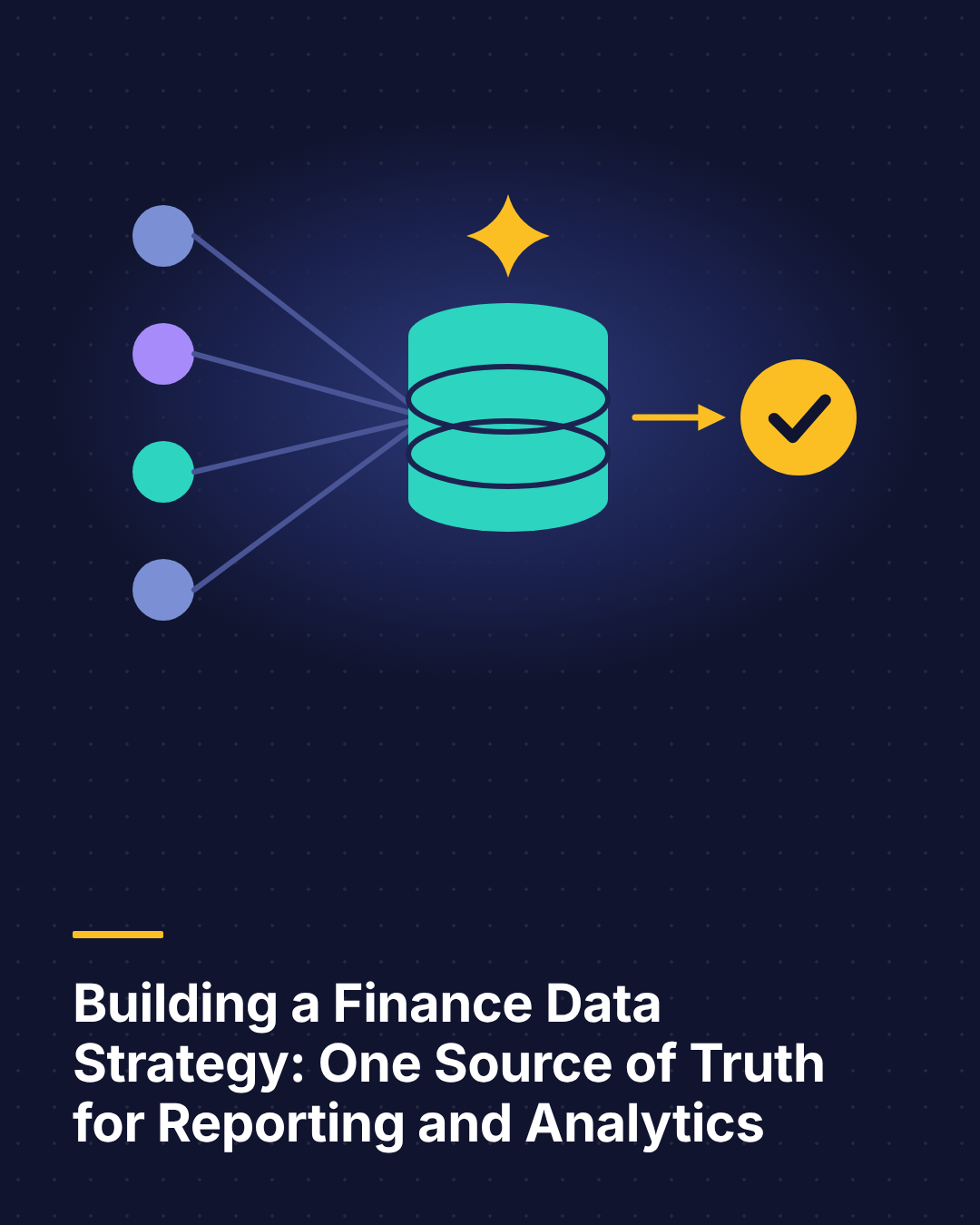
- A central data platform. One place where finance and operational data are combined for reporting and analysis.
- Data ownership. Named owners accountable for the quality of each critical data set.
- Self-service access. Trusted, governed data that analysts and business users can explore on their own.
Where to Start
Start with the metrics that matter most to leadership and that cause the most debate. Agree on their definitions, document where the data comes from and build them once in a central location. Partner closely with IT and data teams, since finance can’t do this alone. Then expand gradually, adding data sets and use cases as trust builds.
The Bottom Line
A finance data strategy turns scattered, conflicting information into a single source of truth that leaders can rely on. It ends the debates over whose number is right, frees analysts to focus on insight instead of reconciliation and lays the foundation for advanced analytics and AI. Few investments do more to raise the credibility and influence of the finance function.
It doesn’t have to be a massive project from day one. Pick the few metrics that matter most, define them clearly, assign ownership and build from there. Over time, the organization learns to trust one version of the story. And like my grandmother’s diary, a single trusted source has a wonderful way of ending arguments quickly.