
Driver-Based Planning: Linking Operational Metrics to Financial Outcomes
When I coached my son’s youth basketball team, I quickly learned that yelling “score more points!” from the sideline didn’t accomplish much. What actually helped was focusing on the things that lead to points: more rebounds, fewer turnovers, better shot selection. Improve those, and the scoreboard takes care of itself.
Driver-based planning applies that same logic to finance. Instead of forecasting revenue and expenses as abstract totals, it ties them to the operational activities that actually produce them.
What Driver-Based Planning Means
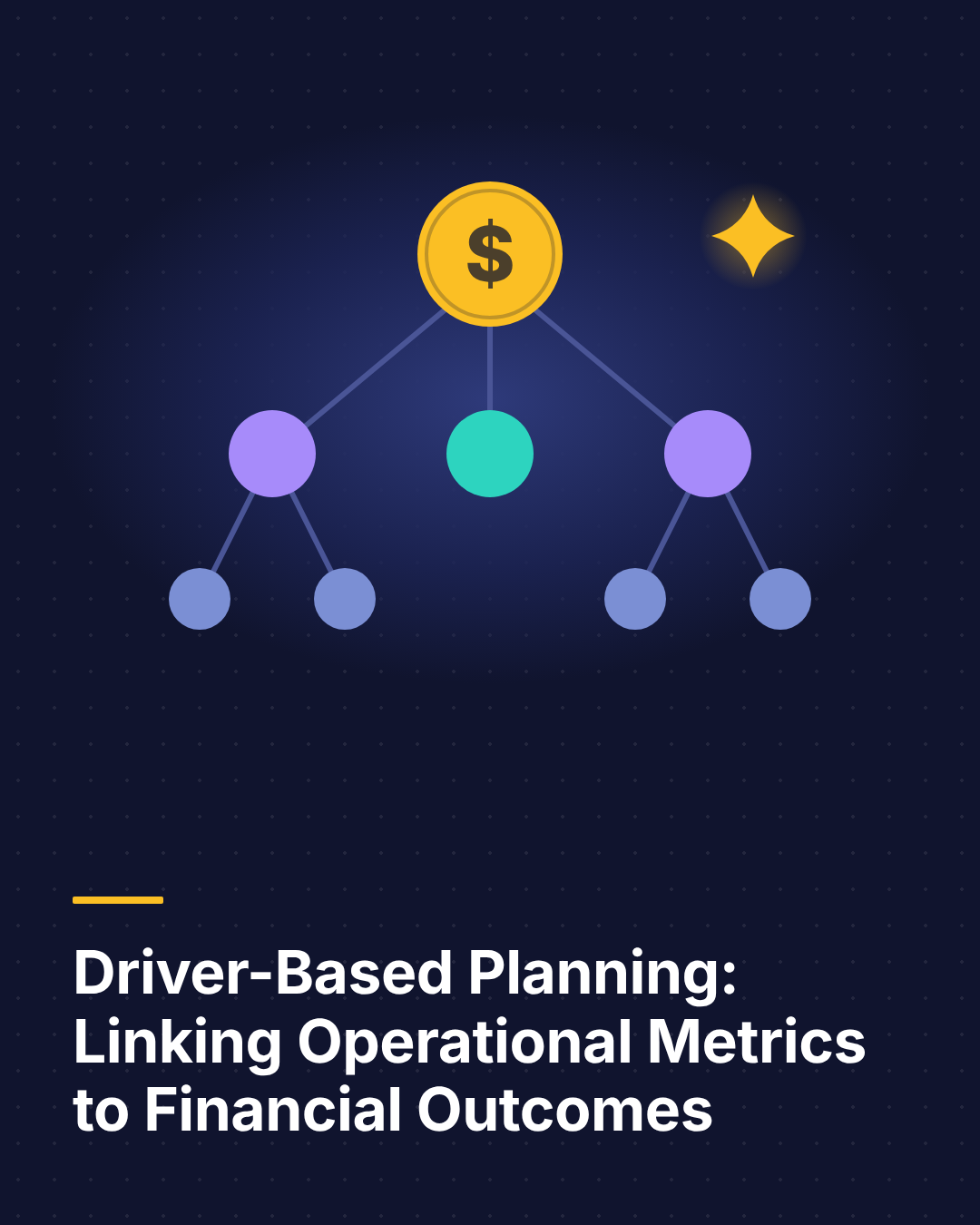
In a traditional plan, someone might simply assume revenue grows 8% next year. In a driver-based plan, revenue is built from the factors behind it: number of sales reps, deals per rep, average deal size and win rate. Expenses are tied to drivers too, like headcount, units produced or customers served. Change a driver, and the financial impact flows through automatically.
Why It’s Gaining Ground
Driver-based planning makes plans more realistic and far easier to update. Some of the biggest benefits include:
- Clear cause and effect. Leaders can see exactly which operational changes move the numbers.
- Faster scenario analysis. Adjust a handful of drivers instead of rebuilding hundreds of line items.
- Better alignment. Operations and finance speak the same language because the plan uses metrics both understand.
- Stronger accountability. Teams own the drivers they control, not just a budget total.
Picking the Right Drivers
The most common mistake is choosing too many. A good driver model focuses on the few factors that explain most of the variation in results. Start by asking which operational metrics have the biggest financial impact and which ones the business can actually influence. Validate those relationships using historical data, and revisit them regularly as the business changes.
It also helps to involve operational leaders in building the model. They understand the drivers better than anyone and will trust a plan they helped design.
The Bottom Line
Driver-based planning connects the numbers finance reports to the activities that create them. That connection makes plans more accurate, scenarios faster to run and conversations with operational leaders far more productive. Instead of debating whether a revenue target is reasonable, teams can discuss the specific levers that will get them there.
Start with a small set of meaningful drivers, test them against history and expand the model as confidence grows. Over time, the plan becomes a shared tool for the whole business rather than a finance exercise. Just like on the basketball court, focus on the things that lead to results, and the scoreboard has a way of taking care of itself.