
Learning in the Flow of Work: Designing Upskilling Programs Employees Actually Complete
I have a confession: I’ve enrolled in more online courses than I’ve finished. And I don’t think I’m alone. Most of us start a course with great intentions, then a deadline hits, a big project lands and suddenly that half-finished module is collecting digital dust.
For companies investing in upskilling, that pattern is a real challenge. Low completion rates mean skills never get built and budgets don’t deliver. The fix isn’t asking employees to try harder. It’s designing learning that fits into the way people actually work.
What “Learning in the Flow of Work” Means
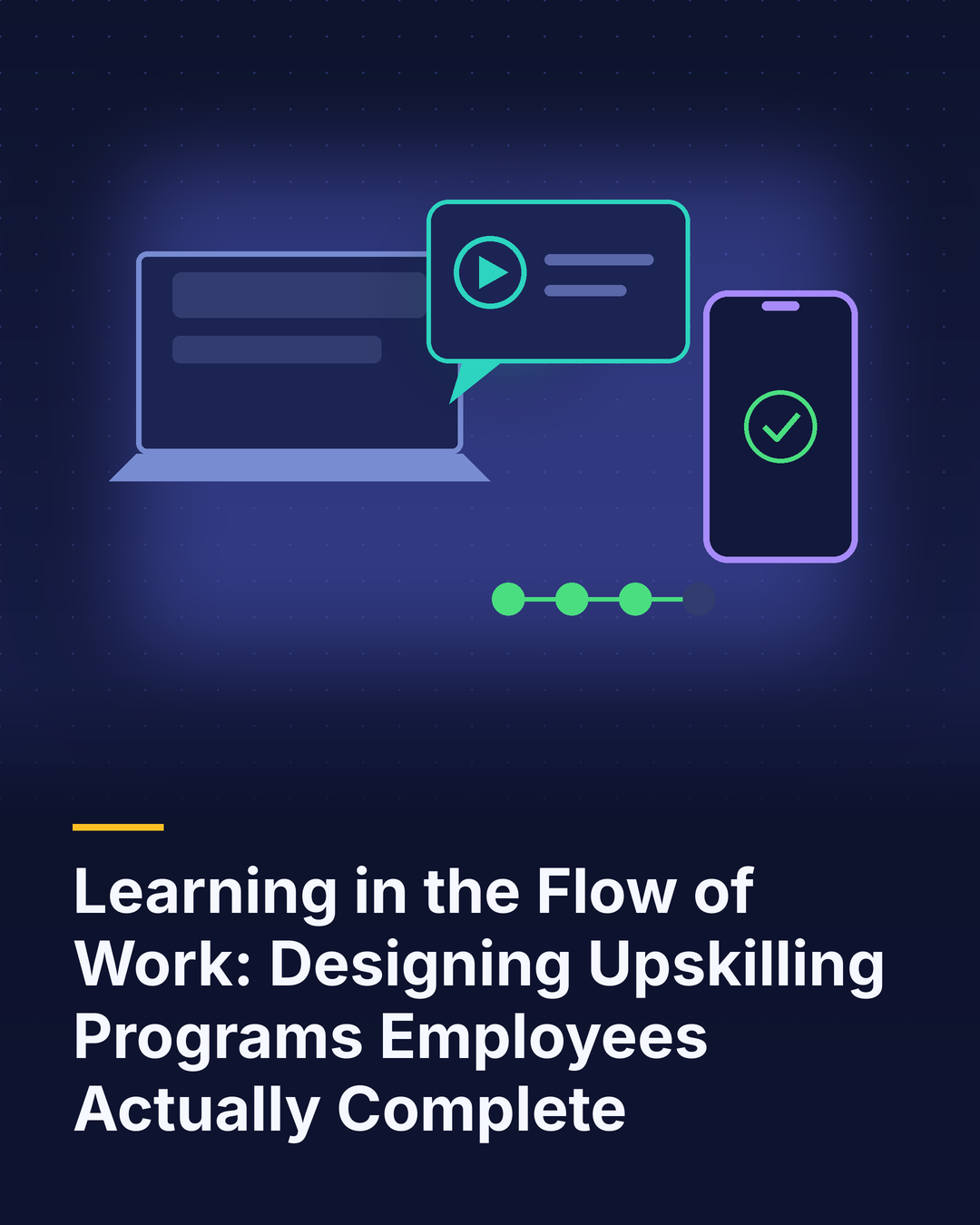
The idea is simple: bring learning to employees where they already are, in the tools and moments of their workday, instead of asking them to step away for hours at a time. Think short lessons accessed right inside a collaboration app, a quick tutorial that pops up when someone opens a new software feature or an AI assistant that explains a concept in the middle of a task.
Design Principles That Boost Completion
Programs that employees actually finish tend to share a few traits:
- Bite-sized content. Lessons of five to fifteen minutes fit between meetings and keep momentum going.
- Immediate relevance. Learning tied to a real task or upcoming project gets used right away, which makes it stick.
- Mobile access. Employees can learn on a commute, between site visits or whenever they have a spare moment.
- Clear goals and milestones. Progress tracking and small wins keep motivation high, a lot like hitting personal bests in training.
- Manager support. When managers set aside time and check in on progress, completion rates climb.
- Social learning. Cohorts, study groups and team challenges add accountability and a little friendly competition.
Don’t Forget Recognition
Celebrating progress makes a real difference. Shout-outs in team meetings, digital badges and visible credentials on internal profiles all signal that learning matters. Linking completed programs to new projects or career opportunities is even more powerful.
The Bottom Line
Upskilling programs succeed when they fit naturally into the workday rather than competing with it. Short, relevant, mobile-friendly content, supported by managers, peers and meaningful recognition, helps employees not only start learning but actually finish. Companies that design this way see stronger completion rates, faster skill growth and a better return on their learning investment. And for people like me with a few unfinished courses in our past, it makes reaching the finish line feel a whole lot more achievable.