
Rolling Forecasts vs. Annual Budgets: Which Model Fits Your Business?
Every January, my family sits down and plans our summer vacation. We pick dates, book a rental and map out the whole trip. And every year, by about April, something changes. A soccer tournament gets added, a work trip moves, gas prices jump. By June, the plan we made in January looks almost nothing like the trip we actually take.
Annual budgets have the same problem. They’re built months in advance on assumptions that rarely survive the year intact. That’s why more finance teams are asking whether rolling forecasts are a better fit.
The Case for the Annual Budget
The annual budget isn’t broken. It gives the organization a clear financial plan, sets targets for managers and provides a baseline for measuring performance. It’s also familiar, well understood by boards and lenders and tied to compensation in many companies. For stable businesses with predictable revenue, an annual budget can work perfectly well.
Where Annual Budgets Fall Short
The challenge is that the world moves faster than a twelve-month plan. Budgets can become outdated within weeks, encourage “use it or lose it” spending and consume months of effort to build. Managers end up measured against numbers everyone knows are no longer realistic.
How Rolling Forecasts Work
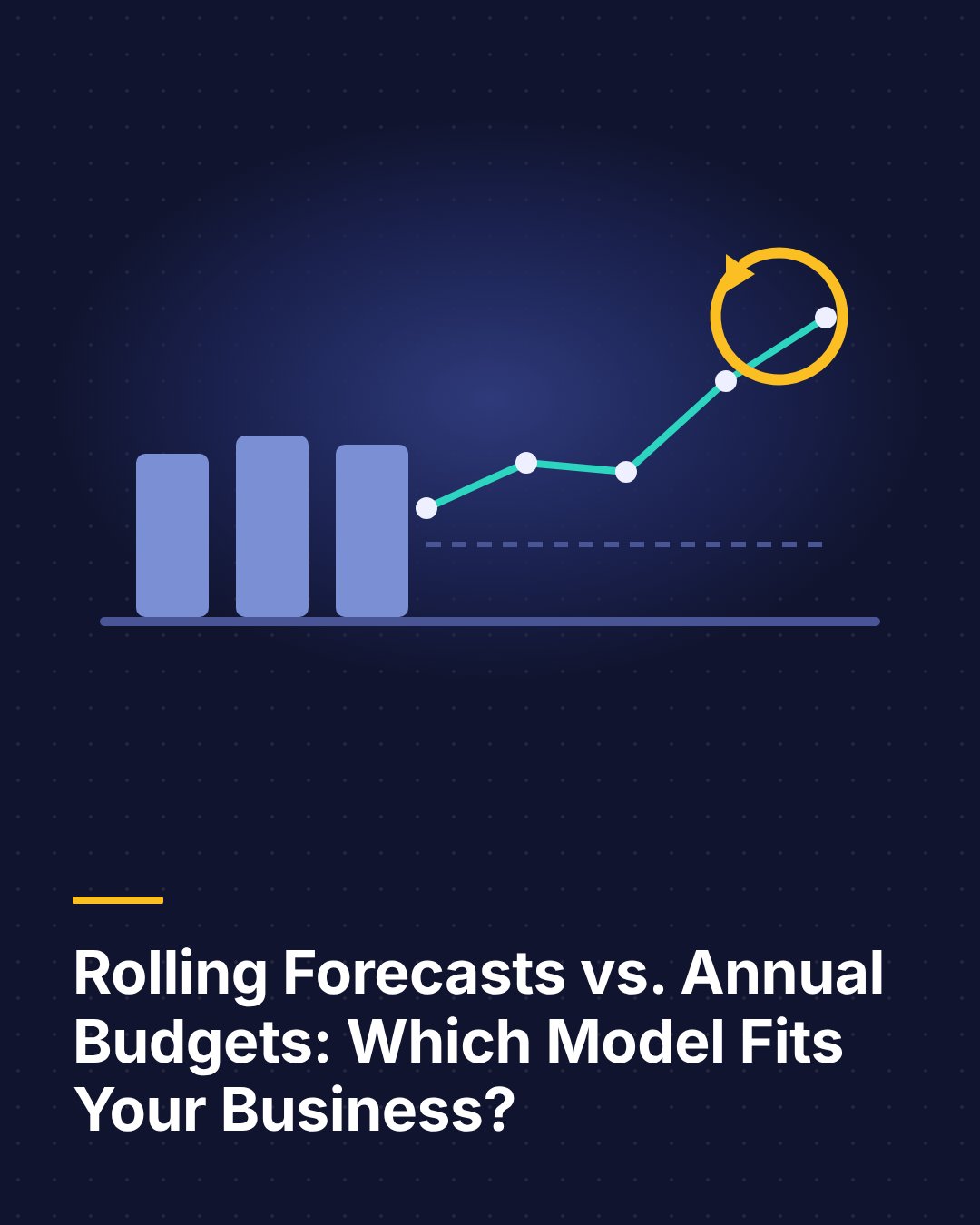
A rolling forecast looks a fixed distance ahead, typically 12 to 18 months, and is updated regularly, often monthly or quarterly. Each time a period closes, another is added to the end. The benefits include:
- Always-current outlook. Leaders see a forward view that reflects the latest conditions.
- Faster response. Resources can be shifted as opportunities and risks emerge.
- Less wasted effort. Updates focus on key drivers rather than rebuilding every line.
- Better conversations. Discussions shift from explaining variances to planning what comes next.
Choosing the Right Model
Many companies land on a hybrid: an annual budget for targets and accountability, paired with a rolling forecast for decision-making. The right mix depends on how volatile your business is, how mature your planning tools are and how much your leadership values flexibility over fixed targets.
The Bottom Line
There’s no single right answer, but there is a right question: does your planning process help leaders make better decisions throughout the year? If your budget is outdated by spring, a rolling forecast, or a hybrid approach, can give you a living view of the business that adapts as conditions change. It also frees your team from spending months building a plan that’s obsolete almost as soon as it’s approved.
Start small by adding a rolling forecast alongside your existing budget, focus on the handful of drivers that matter most and build the habit of updating regularly. Over time, the organization learns to plan continuously rather than once a year. After all, we still plan our summer vacation every January. We’ve just learned to keep updating the plan as the year unfolds.