
Scenario Planning in a Volatile Economy: Tools and Techniques for FP&A
Before every road trip, my husband checks the weather, the traffic and the gas prices along the route. I used to tease him about it. Then one winter we hit an unexpected snowstorm, and he already had a backup route mapped and a hotel picked out. I stopped teasing after that.
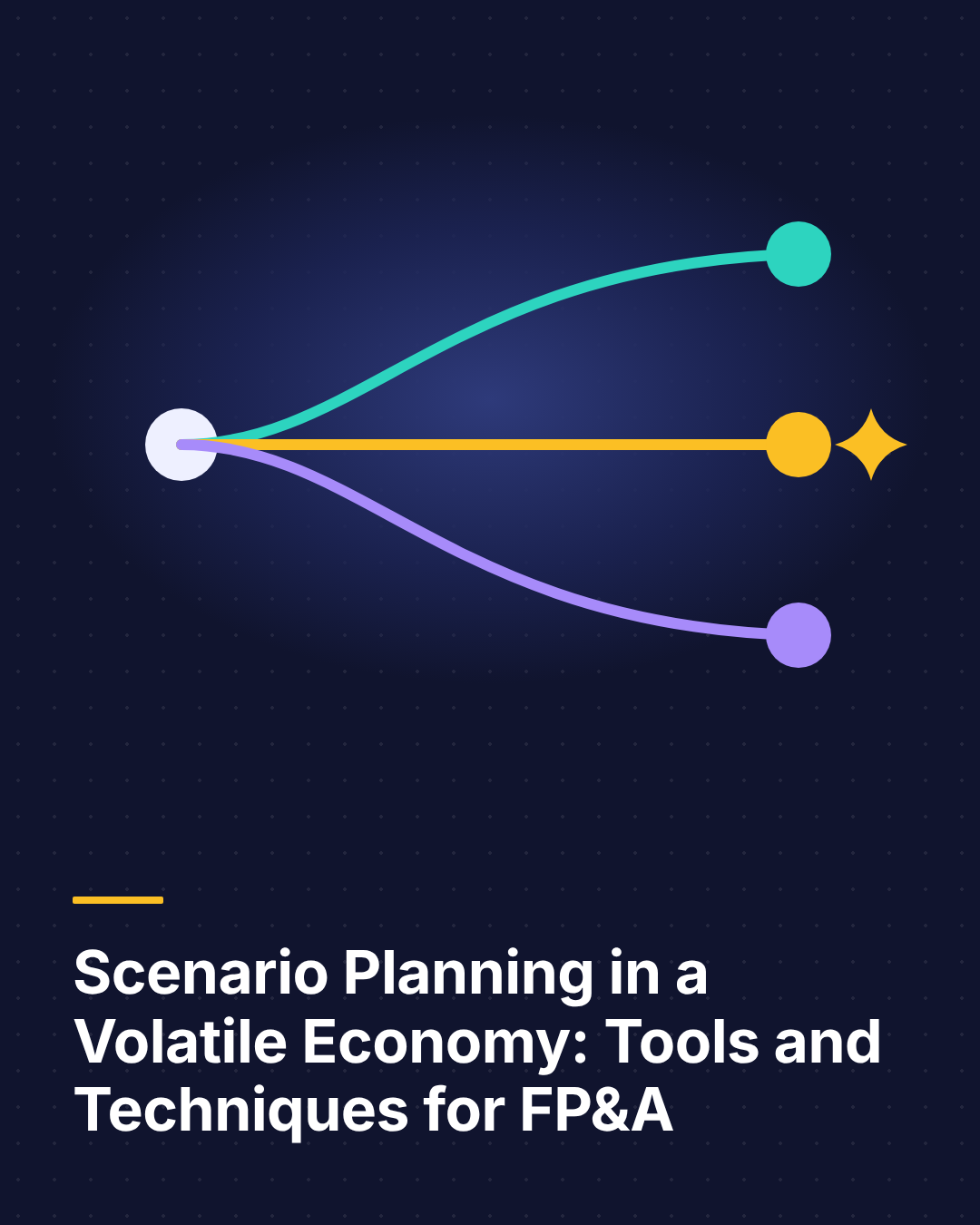
Scenario planning is the finance version of that backup route. In an economy where interest rates, supply chains and customer demand can shift quickly, FP&A teams that plan for multiple futures are far better prepared than those betting on just one.
Why a Single Forecast Isn’t Enough
A single forecast gives leaders one number to plan around, which feels reassuring until reality goes a different direction. When conditions change, companies with only one plan are left scrambling. Scenario planning replaces false certainty with a range of plausible outcomes, along with a clear sense of what the business would do in each.
Building Useful Scenarios
The most effective scenario plans are focused and practical. Here’s what tends to work:
- Start with key uncertainties. Identify the few external factors that would most affect results, such as demand, pricing, input costs or interest rates.
- Keep the set small. Three to five well-defined scenarios are more useful than dozens of variations.
- Link to drivers. Build scenarios on a driver-based model so assumptions flow through to revenue, margin and cash automatically.
- Define trigger points. Agree on the signals that would indicate a scenario is unfolding.
- Pre-plan responses. Decide in advance what actions you’d take in each case.
The Tools That Help
Modern planning platforms make scenario work far easier than spreadsheets alone. They allow analysts to copy a baseline, adjust assumptions and compare outcomes side by side in minutes. AI is starting to help as well, identifying patterns in historical data and suggesting which variables matter most. But the real value still comes from the conversations scenarios spark among leaders.
The Bottom Line
Scenario planning won’t predict the future, but it will help your organization respond to it with speed and confidence. By focusing on the uncertainties that matter most, linking them to your financial model and agreeing on responses in advance, FP&A turns volatility from a threat into something the business can manage. Leaders stop reacting to surprises and start executing plans they’ve already thought through.
The best time to build scenarios is before you need them, while there’s time to think clearly. Start with a simple base, upside and downside view, review it regularly and keep refining as conditions evolve. You may never face the storm you planned for. But if you do, you’ll be glad you already mapped the backup route.