
Skills-Based Hiring: Why Employers Are Looking Beyond the Degree
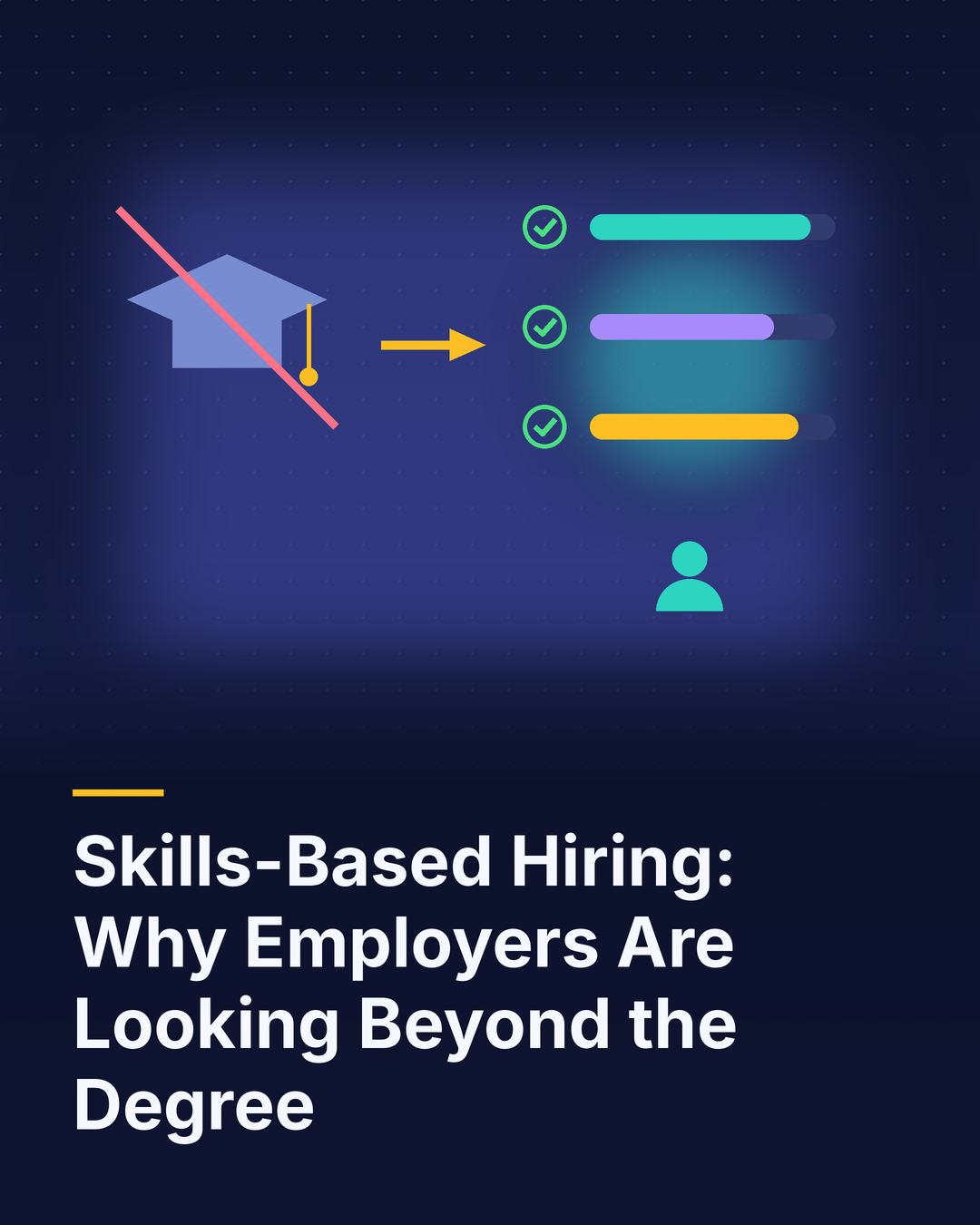
For decades, the four-year degree served as a convenient filter in hiring. If a candidate had one, they made it to the next round. If they didn’t, many never got a second look, no matter how capable they were. That approach is changing, and it’s opening doors for a lot of talented people.
A growing number of employers are shifting to skills-based hiring, focusing on what candidates can actually do rather than where (or whether) they went to college. It’s one of the most encouraging trends in the modern workforce.
Why the Shift Is Happening
Several factors are driving the change. Tech talent shortages have pushed companies to widen their search. Many roles, especially in IT, data and cybersecurity, depend far more on specific, demonstrable skills than on a general degree. And research and real-world experience increasingly suggest that skills and work samples predict job performance better than credentials alone.
There’s also a fairness angle. Degree requirements can exclude talented candidates who took different paths, whether they’re career changers, military veterans, self-taught builders or people who simply couldn’t afford college.
What Skills-Based Hiring Looks Like
In practice, employers are making a few key moves:
- Rewriting job descriptions to focus on required skills rather than default degree requirements
- Valuing alternative credentials, such as professional certificates, bootcamps and portfolios
- Using practical assessments, like work samples, technical challenges and project reviews
- Training hiring managers to evaluate skills consistently and fairly
The Benefits for Employers
Companies that make the shift often find larger, more diverse candidate pools and faster time to fill. New hires tend to be well-matched to the actual work. And because skills-based thinking applies internally too, it helps companies identify employees ready to move into new roles.
The Bottom Line
Skills-based hiring is helping employers find great talent that degree filters used to overlook. By focusing on demonstrated abilities, valuing alternative credentials and using practical assessments, companies build stronger, more diverse teams. It’s a win for employers struggling to fill critical roles and a big win for candidates who’ve built real skills along nontraditional paths. When the focus moves to what people can do, everyone gets a fairer shot at the game.