
The CFO’s Technology Roadmap: Prioritizing Investments for the Next Three Years
When we bought our first house, we made a list of everything we wanted to change: new kitchen, new floors, a deck, landscaping, updated bathrooms. The list was long and the budget was not. So we sat down and asked which projects would make everything else easier, which ones we’d regret delaying and which could wait. We fixed the roof and the wiring first. The fun stuff came later, and it went much more smoothly because the basics were solid.
CFOs face the same challenge with finance technology. The list of possible investments keeps growing: cloud ERP, planning tools, AP automation, AI, analytics and more. A thoughtful roadmap helps decide what comes first.
Why a Roadmap Matters
Without a plan, technology decisions tend to happen one urgent problem at a time. The result is a patchwork of tools that don’t talk to each other, overlapping licenses and data scattered across systems. A multi-year roadmap aligns investments with business strategy, sequences them sensibly and helps finance make a clear case for funding.
How to Prioritize
A practical way to rank potential investments is to consider a few key factors:
- Foundation first. Core systems and data quality that other tools depend on.
- Business impact. How much the investment improves speed, accuracy, insight or cost.
- Risk reduction. Whether it addresses control weaknesses, compliance needs or aging systems.
- Readiness. Whether the team, processes and data are prepared to adopt it.
- Dependencies. What needs to be in place before the next step can succeed.
A Typical Three-Year Sequence
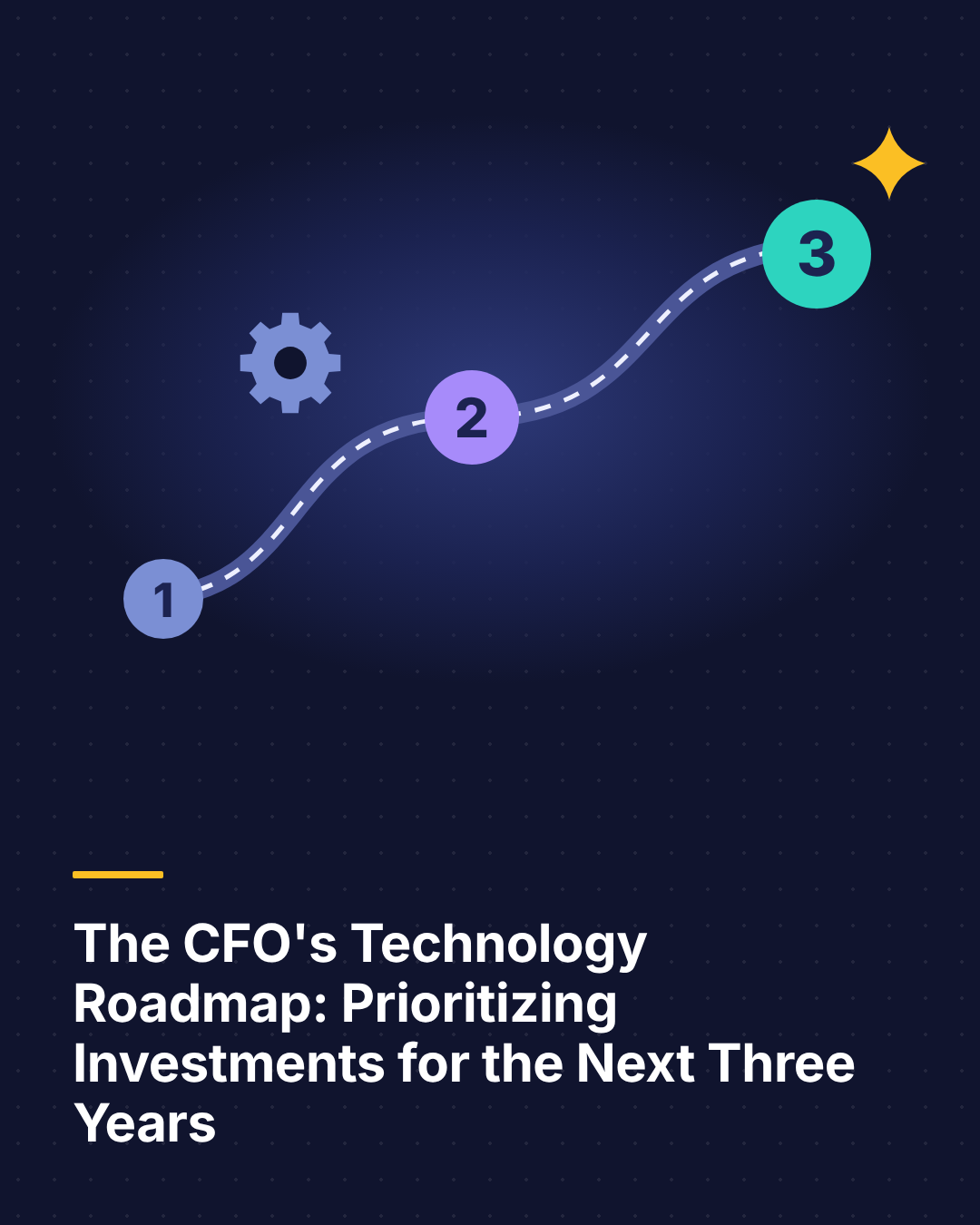
Many finance organizations follow a similar pattern. Year one focuses on foundations: modernizing the core ERP or accounting platform and cleaning up master data. Year two automates high-volume processes like AP, reconciliations and the close. Year three builds on that foundation with advanced planning, analytics and AI. The exact order depends on where each company starts, but foundations almost always come first.
The Bottom Line
A clear technology roadmap helps CFOs invest with purpose instead of reacting to the latest urgent need or the most persuasive vendor. By prioritizing foundations, focusing on business impact and sequencing projects around dependencies, finance can build a modern, connected technology stack that delivers value year after year. It also gives the CEO and board confidence that technology spending is tied to strategy.
Revisit the roadmap at least annually, since business priorities and technology both change quickly. Involve IT, operations and your own team in shaping it, and celebrate milestones along the way. Just like a house renovation, getting the roof and wiring right first makes every project that follows faster, cheaper and far less stressful.