
The Hybrid Work Connectivity Gap: Keeping Remote and On-the-Go Employees Productive
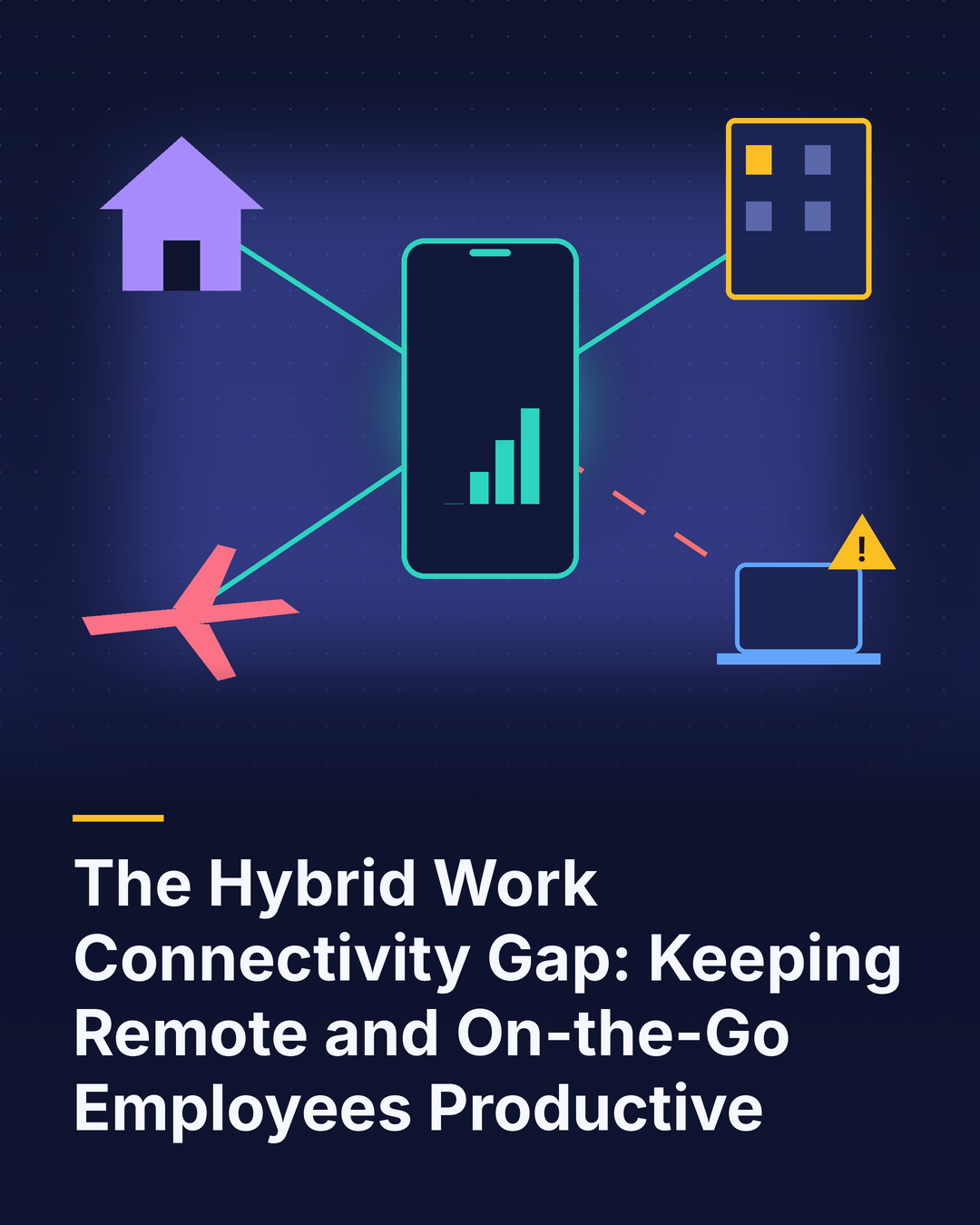
Hybrid work is no longer an experiment. Most knowledge workers now split their week between the office, home and somewhere else entirely: an airport lounge, a client site, a coffee shop, a hotel. Companies invested heavily in collaboration software to support this shift. Many invested far less in the thing that makes it all work, which is the connection.
The result is a quiet productivity drain. Video calls freeze. Large files crawl. Cloud apps time out. Employees tether to their phones, hunt for public Wi-Fi or simply wait until they get back to a better connection. Each incident is small. Across a workforce and a year, the lost time adds up.
Where the gaps show up
Home internet is the most obvious weak spot. Employees work on consumer broadband shared with family streaming and gaming, often with routers placed far from their workspace. Companies have little visibility and even less control.
Travel creates another gap. Public and hotel Wi-Fi is often slow and frequently insecure. Employees may connect to whatever network is available without thinking about the risk to company data.
Then there’s the commute and the in-between time, when a phone’s cellular connection is the only option. If the plan is limited or coverage is weak, that time is lost.
Closing the gap
The most practical step is often to make cellular connectivity a deliberate part of the hybrid work strategy. Business mobile plans with generous high-speed data and hotspot allowances turn every employee’s phone into a reliable backup connection. Laptops and tablets with built-in 5G remove the need to hunt for Wi-Fi at all. For employees who work from home most of the week, fixed wireless home internet can serve as a primary or backup connection independent of their household broadband.
Security should follow the connection. Encourage cellular over public Wi-Fi, use secure access tools that verify the user and device rather than trusting the network, and keep devices updated.
Finally, measure. Ask employees where connectivity fails them. Help desk tickets, collaboration app quality reports and simple surveys reveal patterns that are easy to address once they’re visible.
The bottom line
Hybrid work only works if people can connect reliably wherever they are. Treating connectivity as part of the employee toolkit, rather than something workers figure out on their own, removes daily friction and protects company data. The investment is usually modest compared with the productivity it recovers. And for employees, a connection that simply works is one more reason the hybrid model feels like a benefit rather than a compromise.