
Third-Party Risk Without the Spreadsheets: Modernizing Vendor Security Reviews
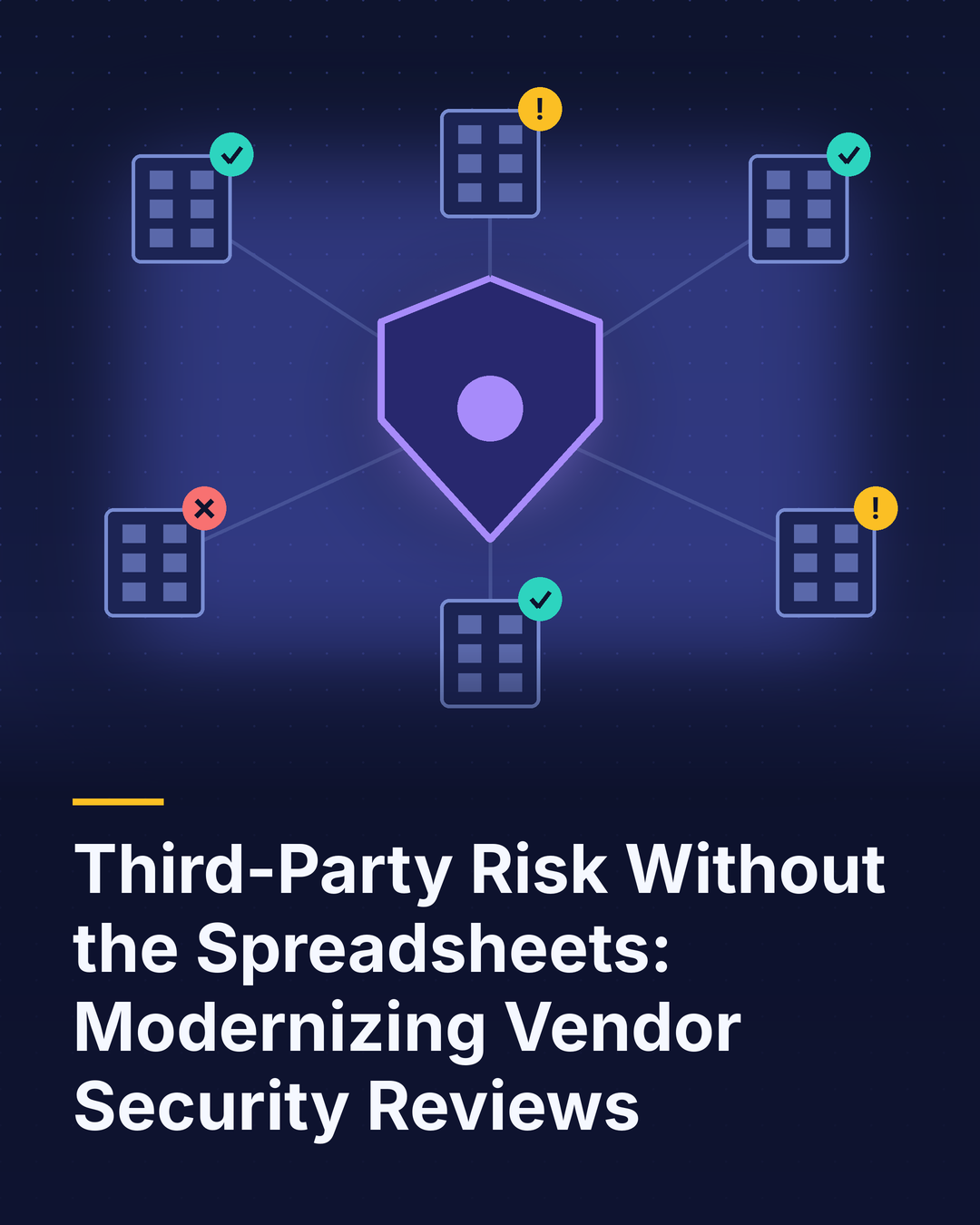
Most organizations now depend on hundreds or even thousands of vendors, from cloud platforms and SaaS applications to payment processors, contractors and AI providers. Each one is a potential path into your systems or your data. Major breaches increasingly start not with a direct attack, but with a compromised supplier, software update or service provider.
Yet many third-party risk programs still run on spreadsheets, emailed questionnaires and annual reviews. Security teams send 300-question surveys, wait weeks for responses, struggle to verify answers and then file them away until next year. The process is slow for everyone, frustrating for vendors and often misses the risks that matter most.
Why the traditional approach falls short
Point-in-time snapshots. A questionnaire completed last year says little about a vendor’s security today.
Self-reported answers. Vendors describe their controls, but questionnaires rarely verify them.
One-size-fits-all reviews. Applying the same exhaustive process to a catering supplier and a core cloud provider wastes effort and delays critical reviews.
Limited visibility beyond direct vendors. Your vendors depend on their own suppliers, creating fourth-party risk most programs never assess.
Business friction. When security reviews take months, business teams find ways around them, signing contracts before reviews are complete.
Five steps to modernize
1. Tier vendors by risk. Classify vendors based on the data they access, their integration with your systems and their importance to operations. Reserve deep reviews for high-risk vendors and use lightweight checks for low-risk ones.
2. Reuse standard evidence. Accept SOC 2 Type II reports, ISO 27001 certifications, standardized questionnaires and vendor trust centers instead of forcing every vendor to answer your custom survey. This speeds reviews and lets you focus on gaps.
3. Use AI to accelerate review. AI tools can now read security documentation, SOC reports and questionnaire responses, map them to your requirements, flag gaps and draft follow-up questions. Work that took analysts days can take hours, though experienced reviewers should still validate conclusions for critical vendors.
4. Monitor continuously. Supplement periodic reviews with ongoing signals, such as external security ratings, breach notifications, leaked credential alerts and changes in a vendor’s ownership or financial stability. Trigger reassessments when risk changes, not just on an annual schedule.
5. Build security into contracts. Define requirements for breach notification timelines, security controls, audit rights, data handling and subcontractor use. Make sure procurement can’t finalize high-risk contracts until security has signed off.
Don’t forget AI vendors
AI providers raise new questions: whether your data is used for model training, where it’s processed, how long it’s retained, which underlying model providers are involved and how the vendor defends against threats like prompt injection. Add these to your assessments for any vendor offering AI features, including existing SaaS providers that have added AI capabilities.
Measure what matters
Track review turnaround times, the percentage of critical vendors with current assessments, open remediation items and vendor-related security incidents. Faster reviews and better coverage show that security can protect the business without slowing it down.
The bottom line
Third-party risk is too important to manage in spreadsheets. By tiering vendors, reusing evidence, applying AI, monitoring continuously and strengthening contracts, security teams can review more vendors more thoroughly, in less time, with less friction for the business.