
ABM in the Age of AI: Personalizing at the Account and Individual Level
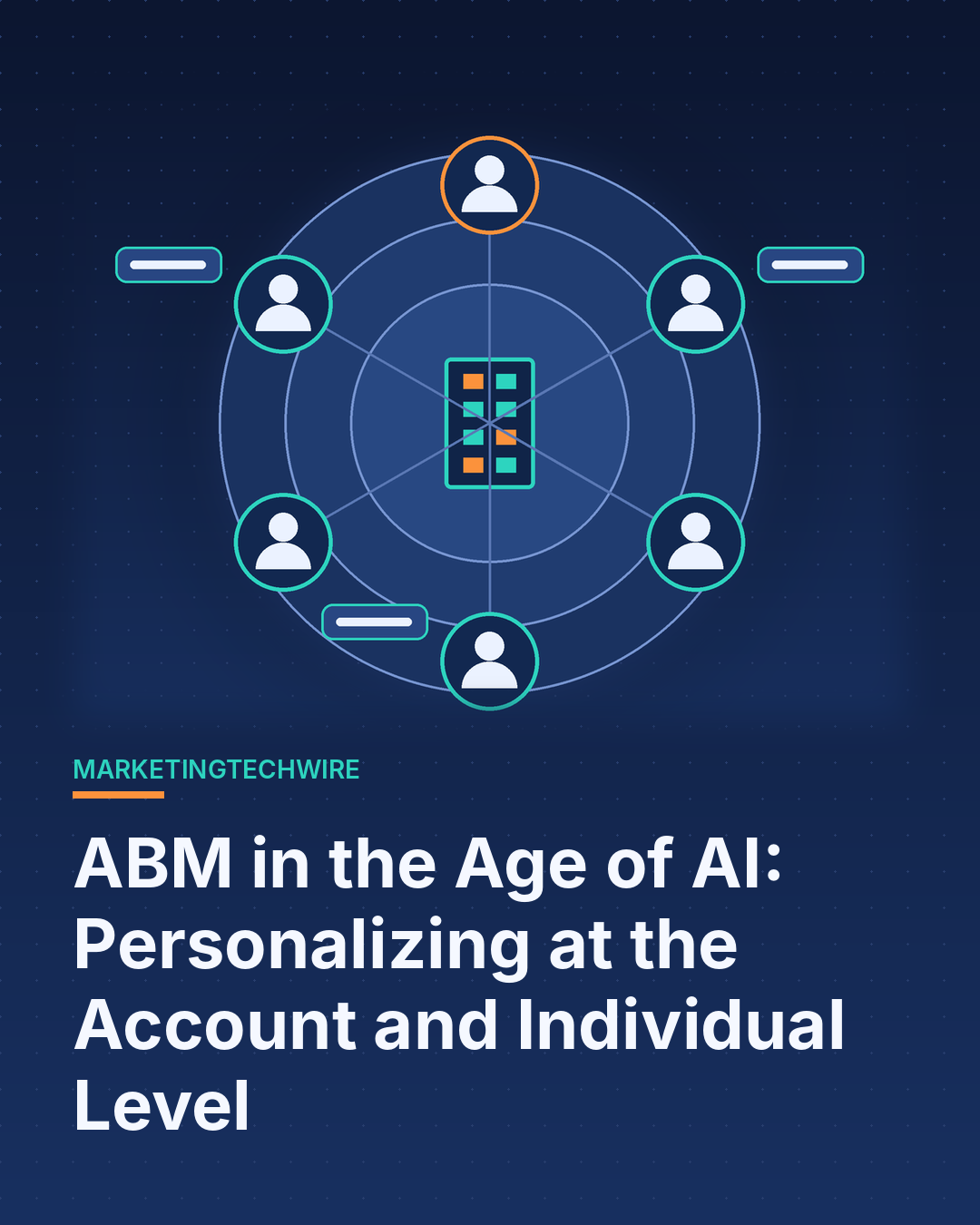
Account-based marketing has always promised the right message to the right account at the right time. In practice, most programs personalized at the account level at best: a company name in the subject line, an industry-specific landing page, a few tailored ads. Deep, one-to-one personalization was reserved for a handful of strategic accounts because it simply took too much human effort.
AI is changing that math. Teams can now personalize for each member of a buying committee, across hundreds or thousands of accounts, without multiplying headcount. But the opportunity comes with real risks for teams that move faster than their data and judgment allow.
From account-level to person-level
B2B purchases are made by committees, often six to ten people with different priorities. The CFO cares about cost and risk. The IT lead cares about integration and security. The end-user champion cares about workflow. A single account-level message can’t speak to all of them.
AI makes it practical to tailor messaging by role, seniority and stage within each target account. A CFO at a target account can receive a brief on total cost of ownership, while their head of operations gets a use-case walkthrough, both reflecting the same account context and buying signals.
Where AI adds the most value in ABM
Account selection and prioritization. Predictive models combine firmographic fit, technographic data and intent signals to rank accounts by likelihood to buy now, so teams focus their effort where timing is right.
Buying committee mapping. AI tools can identify likely stakeholders at an account, infer their roles in the decision and flag gaps where no one has been engaged yet.
Research at scale. Summarizing earnings calls, press releases, job postings and leadership commentary used to take an SDR an hour per account. AI produces a useful account brief in minutes.
Content and messaging variants. Generative tools can adapt core messaging into role-specific emails, ad copy and landing page sections, keeping a consistent narrative across the committee.
Signal-based orchestration. When an account shows a surge in research activity, AI can trigger coordinated plays across ads, email and sales outreach rather than waiting for a quarterly review.
The guardrails that matter
Accuracy first. An AI-generated message that misstates a prospect’s business or role does more damage than a generic one. Human review remains essential, especially for top-tier accounts.
Relevant, not creepy. Personalization should reflect a buyer’s business challenges, not reveal how much you know about their personal online behavior. Respect privacy regulations and consent.
Quality data underneath. AI personalization is only as good as the CRM, intent and contact data feeding it. Invest in data hygiene before scaling output.
Sales alignment. Personalized marketing touches must connect to what sales reps say in their conversations. Shared account briefs and a common view of engagement keep the experience coherent.
Measuring what matters
Shift ABM measurement away from lead volume and toward account progression: buying committee coverage, engagement depth across roles, pipeline velocity and win rates in target accounts versus non-target accounts.
The bottom line
AI finally lets ABM deliver on its original promise at scale. The winners won’t be the teams generating the most personalized content. They’ll be the teams combining accurate data, sharp human judgment and coordinated sales and marketing execution, so that every member of the buying committee feels understood.