
The Hidden Cost of Disconnected Preconstruction Data
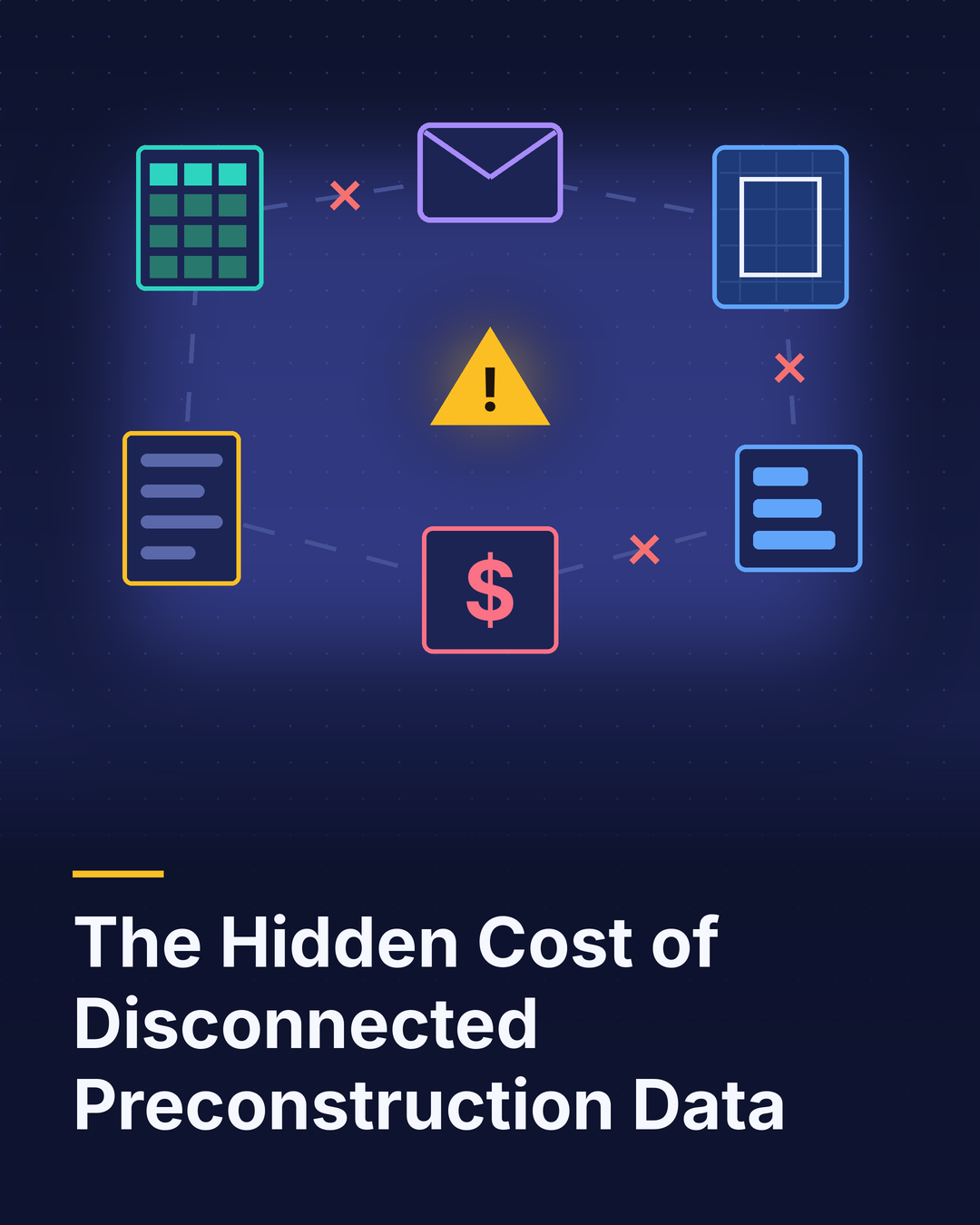
Preconstruction is where projects are won or lost. It’s where scope is defined, costs are estimated, subcontractors are selected, risks are identified and the plan for delivery takes shape. Yet in many construction firms, the information created during this critical phase lives in a patchwork of spreadsheets, email threads, PDF markups, estimating tools and personal files.
That fragmentation rarely shows up as a line item in a budget. But it carries real costs that compound throughout the life of a project.
Where the data breaks apart
A typical preconstruction workflow involves multiple disconnected steps. Drawings arrive by email or file transfer. Estimators perform takeoffs in one tool and build estimates in another. Bid invitations go out through a separate system or individual emails. Subcontractor questions and addenda are tracked in inboxes. Bid leveling happens in spreadsheets. Key decisions and assumptions live in meeting notes, if they’re recorded at all.
When the project is awarded, much of that knowledge must be manually re-created for the operations team, or it’s simply lost.
The costs nobody tracks
Duplicate effort. Teams repeatedly re-enter the same quantities, scope descriptions and subcontractor information across systems. Every re-entry takes time and introduces opportunities for error.
Version confusion. When estimators, subcontractors and designers work from different drawing versions, bids are built on outdated information. Scope gaps and pricing errors often trace back to a missing addendum or superseded sheet.
Scope gaps and buyout surprises. Without a clear, connected record of what each subcontractor included and excluded, gaps surface during buyout or construction, when they’re most expensive to fix.
Lost institutional knowledge. Historical cost data, subcontractor performance and lessons learned are trapped in old spreadsheets and email archives, making each new estimate start almost from scratch.
Slow response times. Pulling together information from many sources slows bid preparation, limiting how many opportunities a team can pursue and reducing time for value engineering.
Weak handoffs. When preconstruction assumptions, risks and commitments don’t transfer cleanly to project teams, operations starts with an incomplete picture, often repeating work that was already done.
What connected preconstruction looks like
Leading contractors are moving toward integrated workflows where:
- Drawings and models are managed in a single, version-controlled environment
- Takeoffs link directly to estimates, so design changes flow through quickly
- Bid invitations, subcontractor communications and bid comparisons happen in one place
- Scope, assumptions and decisions are documented and searchable
- Awarded project data transfers directly into project management, cost control and field systems
- Historical data feeds future estimates and subcontractor selection
How to start connecting the dots
Begin by mapping your current preconstruction workflow and identifying where information is re-entered, lost or delayed. Prioritize the handoffs that create the most rework or risk, such as drawing management, bid leveling or the transition to operations. Standardize data structures, like cost codes and scope categories, so information can flow consistently across systems and projects.
The bottom line
Disconnected preconstruction data doesn’t just slow estimators down. It creates errors, weakens bids and passes risk downstream into construction. Firms that connect preconstruction information from first drawing to project handover will bid smarter, buy out with confidence and start every project with a clearer picture of what they’ve committed to deliver.
The good news is that firms don’t have to fix everything at once. Connecting even one or two critical handoffs, such as drawings to takeoff or bid leveling to buyout, can deliver measurable gains in speed and accuracy. Each connection builds a richer base of historical data, making every future estimate sharper than the last.