
Digital Daily Logs: Turning Field Reports Into Actionable Project Data
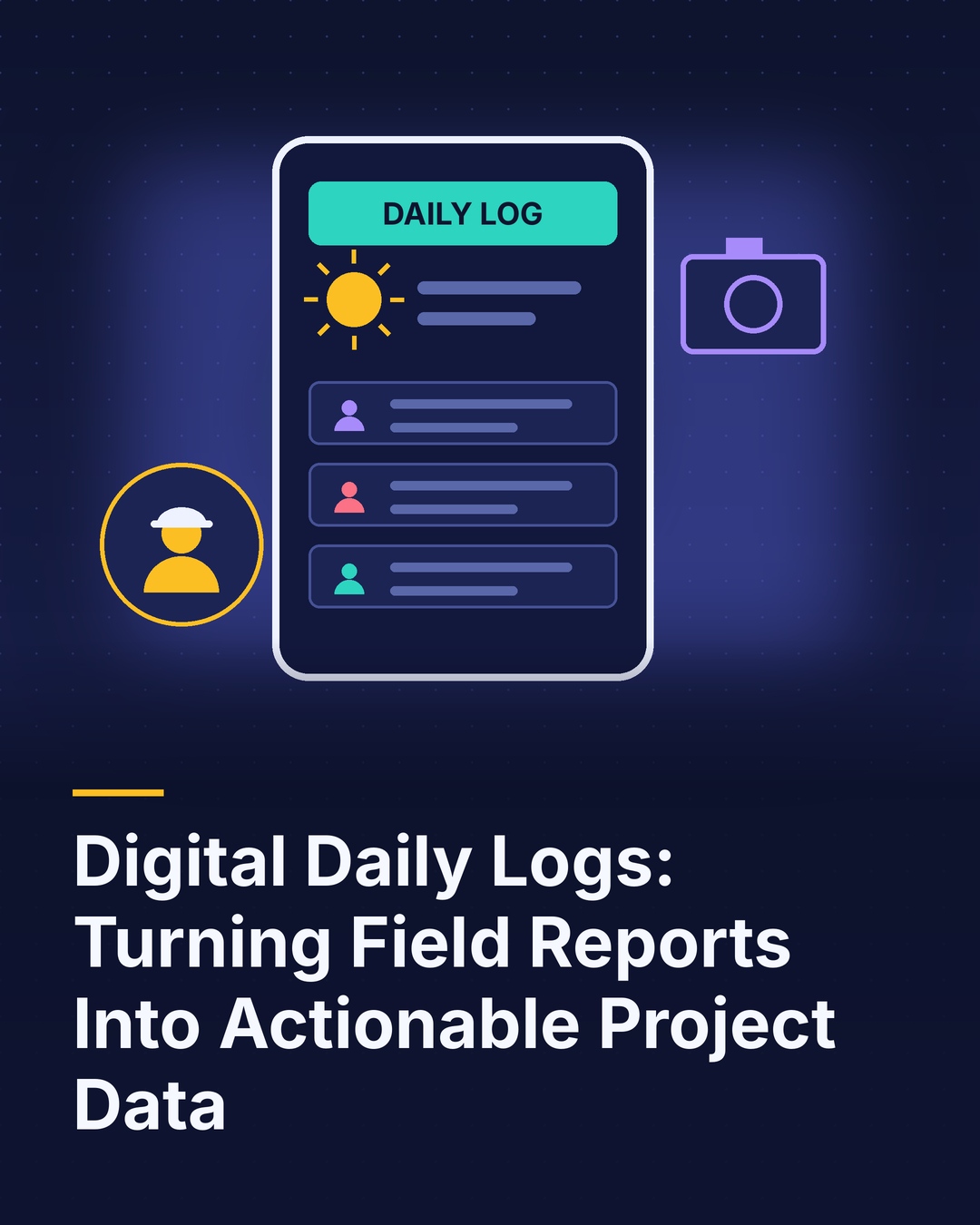
The daily log is one of the oldest habits in construction. At the end of each shift, a superintendent records the weather, the crews on site, the work completed, deliveries, inspections and anything that went wrong. For decades that record lived in a notebook or a spreadsheet emailed to the office, where it was filed and largely forgotten until a claim or dispute sent someone digging through months of entries.
That’s a missed opportunity. Daily logs contain some of the most accurate, timely information on any project. The challenge is getting it into a form people can actually use.
What changes when logs go digital
A digital daily log captured on a phone or tablet does more than replace paper. Entries are timestamped and tied to a specific location on the project. Photos attach directly to the work they document. Manpower can be recorded by subcontractor and trade, and delays can be tagged with a cause, like weather, a late delivery or an open RFI.
Once logs are structured this way, they stop being a diary and start becoming data.
Using the information, not just storing it
Project managers can spot trends that would be invisible in paper records. If a mechanical subcontractor’s crew size has dropped for three straight weeks, that’s an early warning about schedule risk. If the same delay cause keeps appearing, it may point to a coordination or supply problem worth escalating. Weather days and lost time can be tallied instantly when it’s time to support an extension request.
Daily logs also strengthen documentation. When a change order or delay claim comes up months later, a searchable record with photos and timestamps carries far more weight than a recollection.
Keeping it simple for the field
None of this works if superintendents see the log as extra paperwork. The best implementations keep entry fast: templates with common fields prefilled, quick photo capture, voice-to-text notes and the ability to copy forward recurring information like crews on site. Some teams also let foremen contribute their own entries, which spreads the load and improves accuracy.
It also helps to show the field how the information gets used. When superintendents see their logs supporting a successful claim or catching a problem early, quality improves on its own.
The bottom line
Daily logs already capture what’s really happening on a project. Making them digital and structured turns that record into a tool for managing risk, supporting claims and improving future planning. The effort required from the field barely changes, but the value to the business grows considerably. Over a portfolio of projects, those logs also build a reliable history of productivity and delays that sharpens every future schedule and estimate.