
How to Identify Which Business Processes to Automate First
Once an organization commits to workflow automation, an immediate question arises: where should it begin? Nearly every department can produce a list of processes it would like automated, and the combined list quickly exceeds any reasonable capacity. Choosing poorly can consume a year of effort on a process that delivers little value. Choosing well builds momentum, credibility and funding for the program as a whole.
Criteria for Prioritization
A disciplined assessment considers several factors together rather than relying on whichever department is most persistent.
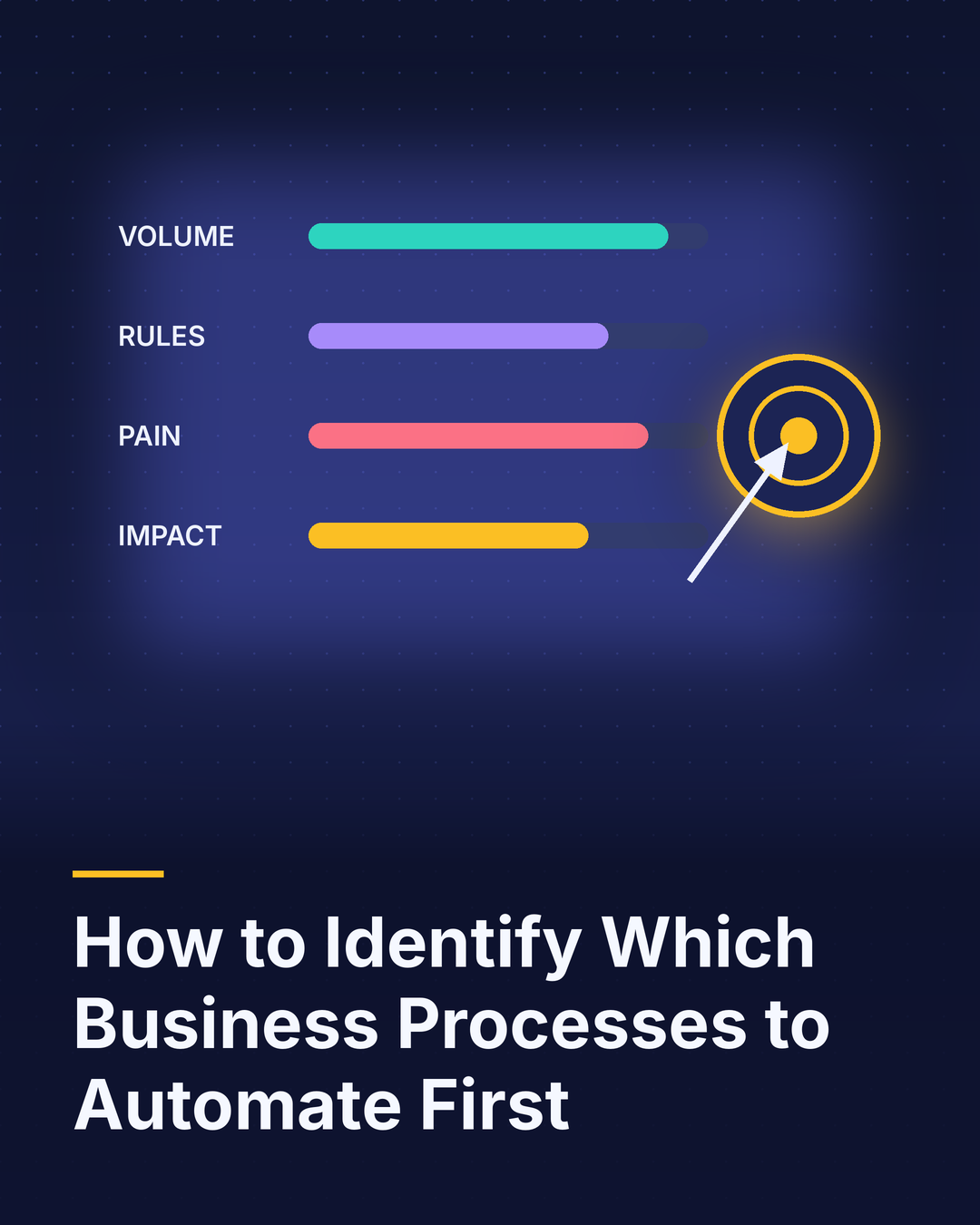
- Volume. Processes that occur hundreds or thousands of times each month offer far greater cumulative benefit than those performed occasionally.
- Standardization. Processes that follow consistent rules are easier to automate than those requiring frequent judgment or exception handling.
- Pain. Processes that generate visible frustration, complaints or delays among employees or customers create natural advocates for change.
- Measurability. Processes with clear start and end points make it straightforward to demonstrate improvement.
- Risk and compliance exposure. Processes in which errors carry regulatory or financial consequences benefit particularly from consistent, auditable automation.
Scoring candidate processes against these criteria, even informally, quickly separates strong candidates from weaker ones.
Look for Cross-Functional Opportunities
The greatest value often lies not within a single department but in processes that cross departmental boundaries. Employee onboarding, access management, vendor setup and customer order exceptions all involve multiple teams and suffer from manual handoffs. Automating them improves the experience for many people at once and demonstrates the value of a common platform.
Avoid Automating a Broken Process
A familiar mistake is to automate a process exactly as it exists today. If a process contains unnecessary approvals, redundant data entry or unclear ownership, automation will simply perform those inefficiencies more quickly. Before automating, it is worth mapping the current process, questioning each step and designing a simpler future state.
Start Small, Then Expand
The first automation should be achievable within weeks rather than months. A quick, visible success builds confidence among stakeholders and provides lessons that inform larger projects. From there, organizations can build a roadmap that sequences processes by value and dependency, reusing common components such as forms, approval rules and integrations as the program grows.
The Bottom Line
Selecting the right processes to automate first is as important as the automation itself. High-volume, standardized and visibly painful processes, particularly those spanning several departments, typically deliver the strongest early returns. Simplifying each process before automating it ensures that the investment produces genuine improvement rather than faster inefficiency. A thoughtful first selection creates the momentum that every automation program needs, and turns skeptical stakeholders into supporters for the work that follows.